 Retail
 & showrooms
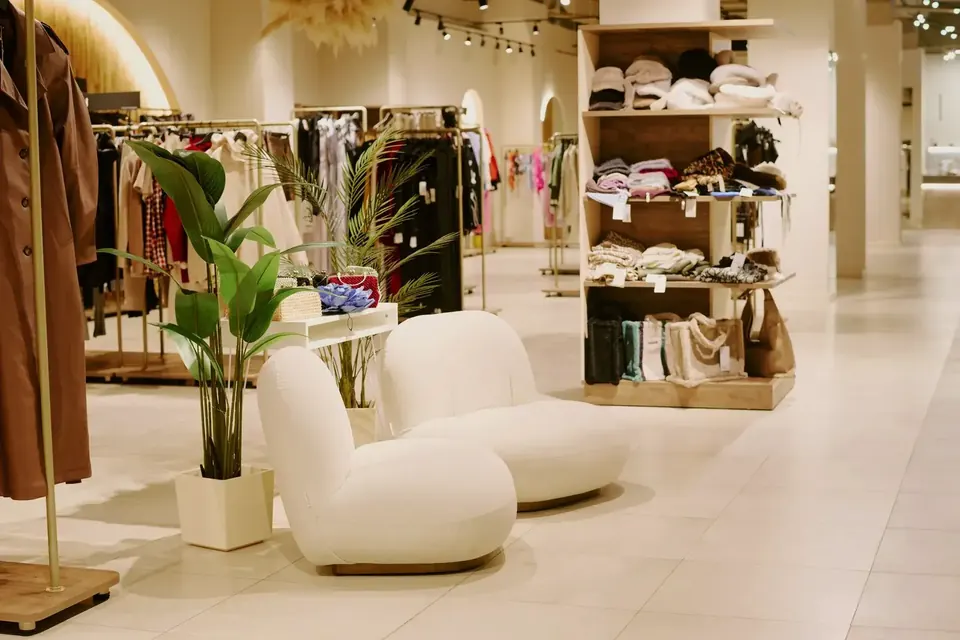
Bright, seamless floors that make merchandise look good and stay presentable under steady foot traffic. Decorative and metallic finishes can reinforce your brand.
Free on-site estimate
Tell us about the floor. We'll handle the rest.
Four quick fields. We'll follow up to schedule a visit, look at the slab in person and give you a written price for the system that suits it.
Commercial epoxy flooring
Retail, food service, healthcare, personal care and service businesses need floors that look professional, clean up quickly and stand up to traffic, all installed without shutting down for weeks.
01Overview
Menomonee Falls has a broad business community: shops and restaurants along Appleton Avenue and in the Village Centre, offices and clinics on the main corridors, and service businesses tucked into commercial buildings around the village. Each type of space asks something different of its floor.
A boutique wants a clean, bright look that suits its brand. A salon needs a floor that shrugs off hair dye, chemicals and constant sweeping. A clinic needs easy sanitation. A restaurant kitchen has to stay grippy through grease, scalding water and a nightly hose-down. An auto service shop needs a floor that handles fluids, jacks and lifts.
Commercial epoxy flooring covers all of those needs. The system is built from the same basic components as residential floors, but specified for the traffic, chemicals, cleaning methods and safety standards of the business. Finish options include solid colors, decorative flake, metallic and quartz-style textures.
Just as important is scheduling. We plan commercial projects around your hours. That may mean working evenings or weekends, phasing work section by section, or using fast-curing systems so you can reopen sooner. We talk through logistics in detail before work begins.
Many commercial floors we see are being converted from something else: worn VCT in an older office suite, carpet tiles in a former retail unit, or bare concrete in a space that has just changed tenants. Removal of the old flooring and adhesive is often the biggest variable in the schedule, so we look under the existing floor during the site walk whenever possible.
02Industries
These are common commercial settings for resinous floors. If your space is not listed, ask. The same principles usually apply.
RetailBright, seamless floors that make merchandise look good and stay presentable under steady foot traffic. Decorative and metallic finishes can reinforce your brand.
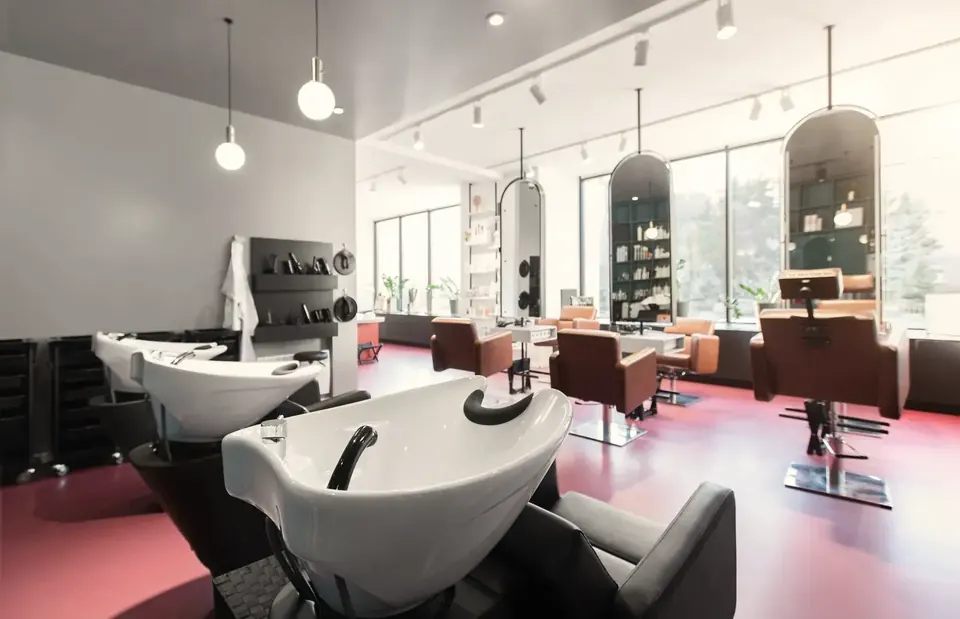 Personal care
Resistant to color, chemicals and frequent cleaning. Seamless surfaces make sweeping hair and wiping spills simple.
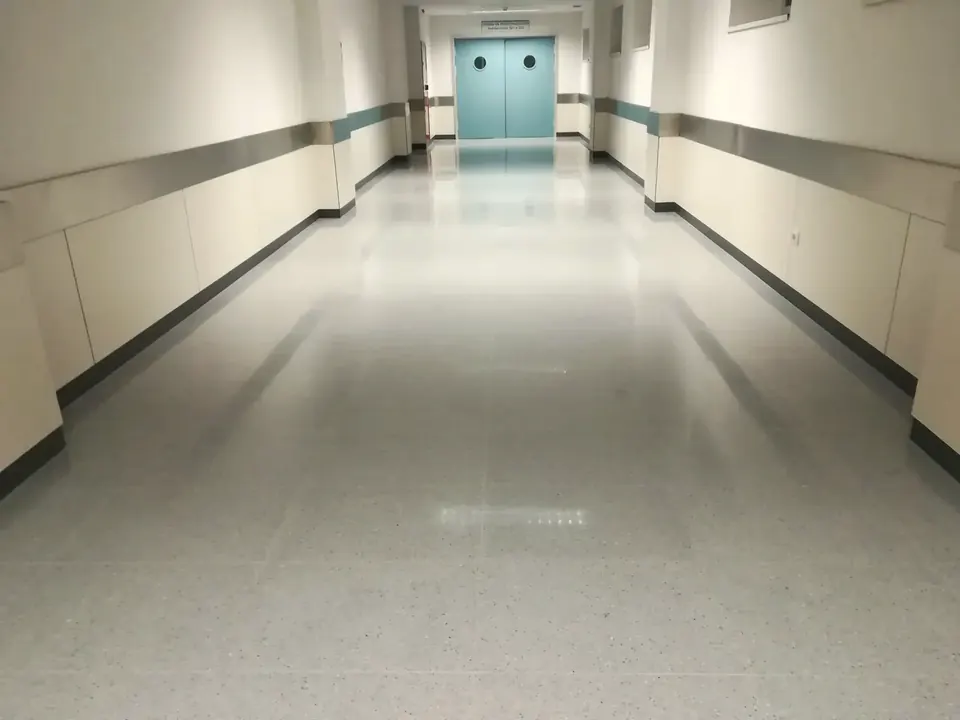 Healthcare
Seamless floors with integral cove bases support easy cleaning and a calm, professional appearance in exam rooms, corridors and waiting areas.
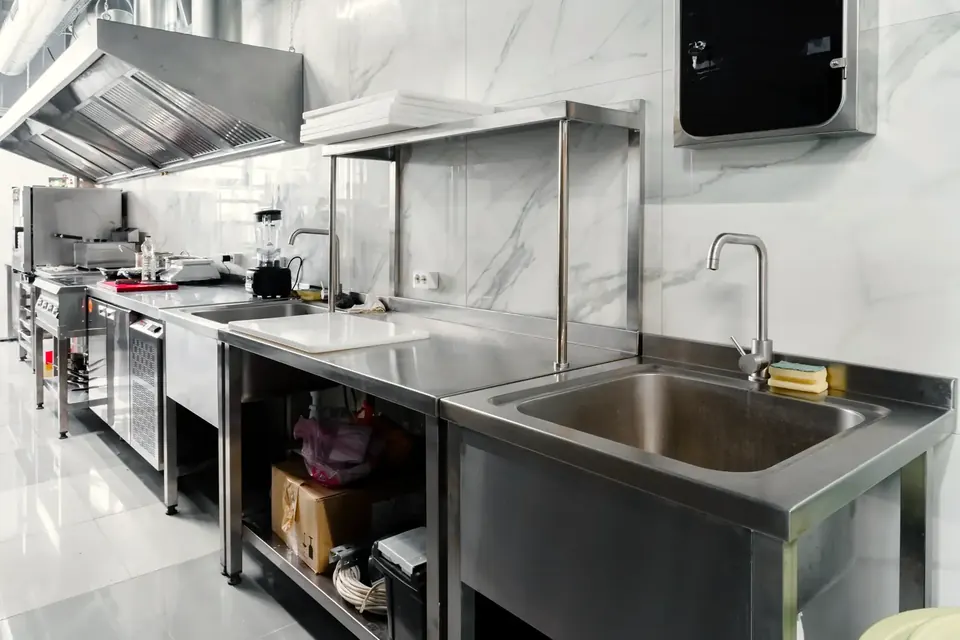 Food service
Textured, slip-resistant systems designed for grease, hot water and daily washdowns. We coordinate with your schedule and any inspection requirements.
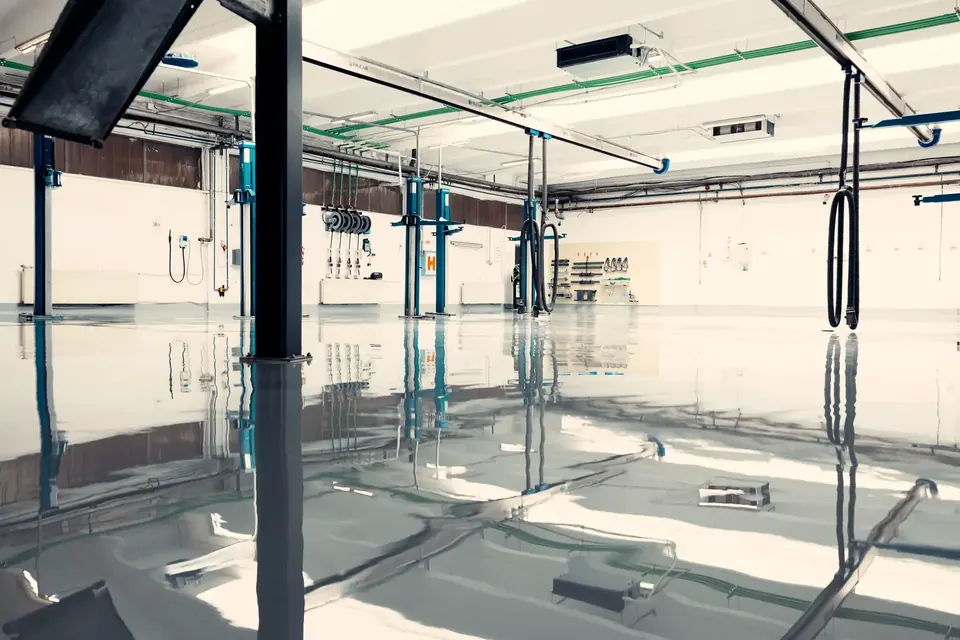 Automotive
Chemical- and abrasion-resistant floors that brighten the shop, handle fluids and make it easier to keep a clean customer-facing image.
 Office
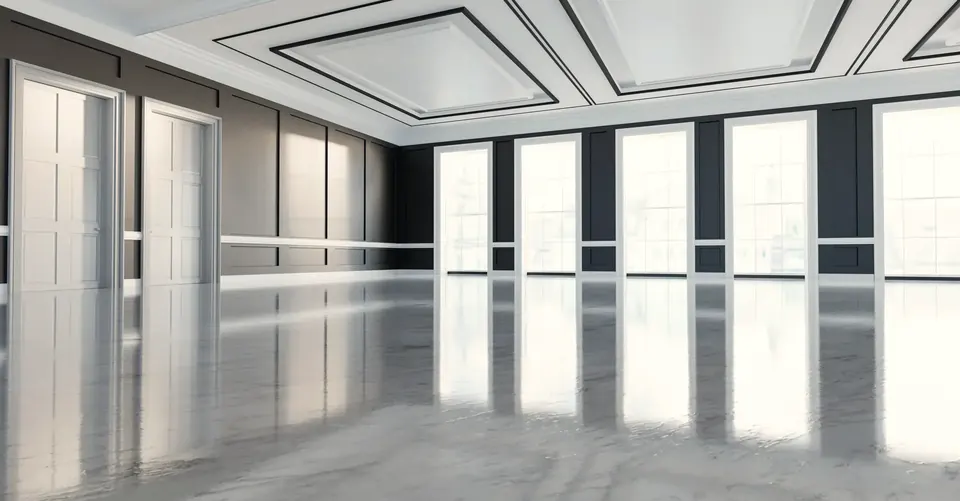
Durable, attractive floors for lobbies, break rooms and corridors in office buildings and multi-tenant properties.
03Planning
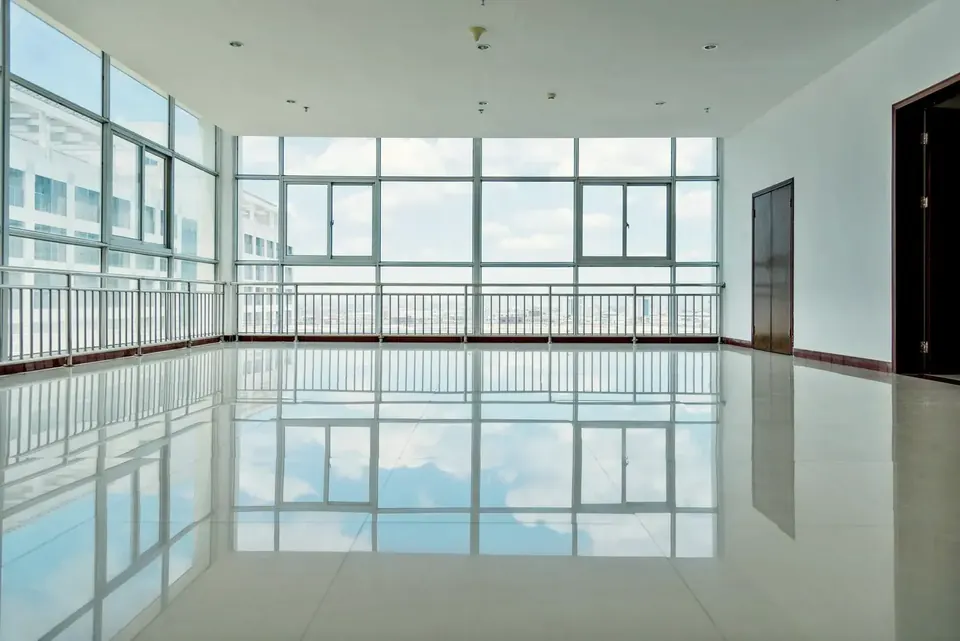
For a business, the cost of a new floor includes every day you cannot use the space. We plan to keep that number as small as possible.
Fast-cure systems can let us complete small spaces overnight or over a weekend. Larger spaces can be split into zones so part of your business keeps running while another part is being coated. We coordinate dust control, ventilation and access so employees and customers can work around the project safely.
Before we start, you receive a written schedule covering each phase, cure times and when each area can return to service.
04Benefits
Seamless surfaces without grout lines are easier to clean and keep clean, especially with integral cove bases.
Built to handle foot traffic, carts, chairs and equipment, and to resist the chemicals common in your industry.
Textures are matched to the space, from smooth retail floors to aggressive textures in wet kitchens.
Reflective finishes brighten the space, helping products look their best and improving visibility.
No waxing, stripping or regrouting. Routine cleaning is often a quick auto-scrubber or mop pass.
Colors, flake blends and metallic finishes can coordinate with your brand and interior design.
05Installation
We review the space, traffic patterns, chemicals, cleaning methods, schedule constraints and any regulatory requirements.
You receive a written system specification, price and phased schedule, including cure times and return-to-service dates.
Grinding or shot blasting, removal of old coverings, crack and joint repair, and moisture mitigation where needed.
Primer, body coats, broadcast or decorative layers and topcoats, installed in phases if necessary.
We walk the floor with you and provide cleaning and maintenance guidance for your staff.
06Wisconsin considerations
Businesses here deal with seasonal challenges that affect their floors.
Salt, sand and slush come in on every customer's boots. Entry zones need extra texture, durable topcoats and good matting.
Melting snow at entrances and washdowns in kitchens call for slip-resistant finishes that stay safe when wet.
Many businesses prefer to install during slower seasons. We help plan installations around your busy times.
In winter, buildings must be kept warm enough for proper cure while still ventilating. We coordinate with building managers on HVAC.
07System selection
The same chemistry, specified differently, can serve a boutique or a commercial kitchen.
Commercial resinous floors are not one product. They are assembled from layers chosen for the conditions in your space. Here is how those choices usually play out.
Two or three thin coats of epoxy or urethane over prepared concrete. They are economical and suit offices, storage rooms and light-traffic spaces where the main goals are dust control, cleanability and appearance.
Decorative flake or colored quartz broadcast into the base coat, then sealed. These build thickness, add texture and hide wear, which makes them a good match for break rooms, restrooms, locker rooms, salons and retail back-of-house areas.
Heavier, troweled or self-leveling systems with higher impact and thermal resistance. They are typically used in commercial kitchens, food processing and areas with hot washdowns or heavy carts, where a thin coating would not last.
The topcoat is selected for chemical exposure, UV, abrasion and cleaning method. Texture is adjusted based on whether the floor will be dry, wet or greasy in daily use. In a salon, that might mean a smoother finish that sweeps easily. In a dish area, an aggressive texture that stays grippy with water on it.
Integral cove bases, edge details at doors and transitions to other flooring all affect how clean and durable the finished floor will be. We plan them with you during the site walk.
08Questions
Owners and facility managers tend to ask about downtime first. Here is that and more.
Ask us directlyOften, yes, by phasing work section by section or working after hours. Some spaces must close for a short period, especially small shops. We plan a schedule with you that minimizes closures.
Yes. Integral cove bases carry the coating up the wall a few inches with a curved transition, eliminating the corner seam where dirt and moisture collect. They are common in kitchens, clinics and restrooms.
They can be built to whatever traction level your space needs. Smooth finishes suit dry retail areas, while kitchens and entries need aggressive textures. We match texture to how your floor will be used and cleaned.
In most cases, existing tile, VCT and adhesives have to come up first, because the coating needs bare, sound concrete to grab. Removal is included in the scope and price we provide.
Daily dust mopping or sweeping and regular wet cleaning with a neutral cleaner are usually enough. High-traffic areas may need periodic recoating of the topcoat after several years.
Yes. We regularly coordinate with building owners, managers and general contractors on tenant improvements and renovation projects.
Grinding is done with equipment connected to industrial vacuums, and work areas are sealed with plastic barriers. For odor, we select low-odor products where practical, coordinate ventilation with the building, and schedule the most odor-intensive steps after hours.
Colors are straightforward: base coats can be tinted and flake or metallic finishes chosen to complement your brand. Logos and graphics are possible in some systems as inlays or under a clear topcoat. We will show samples and explain how durable each approach is in a high-traffic area.
Resinous floors can be repaired locally. A damaged area is ground out, rebuilt with the same system and recoated. Solid colors can show slight differences in sheen; flake and quartz finishes blend repairs more easily.
10Free estimate
Tell us about your space and schedule. We will walk the site and put together a system and timeline that works.