 Cool
Silver, pewter & glacier
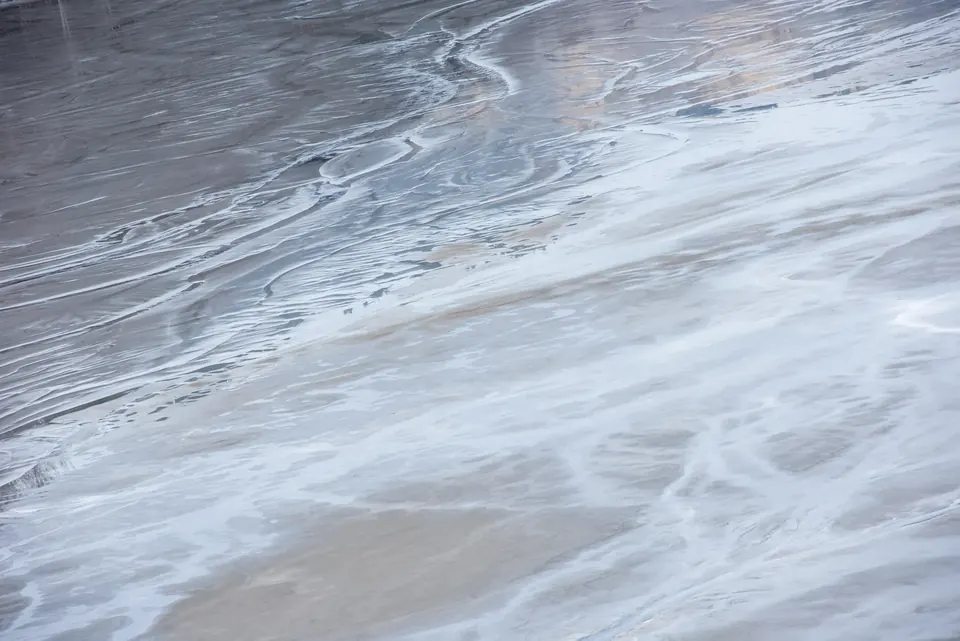
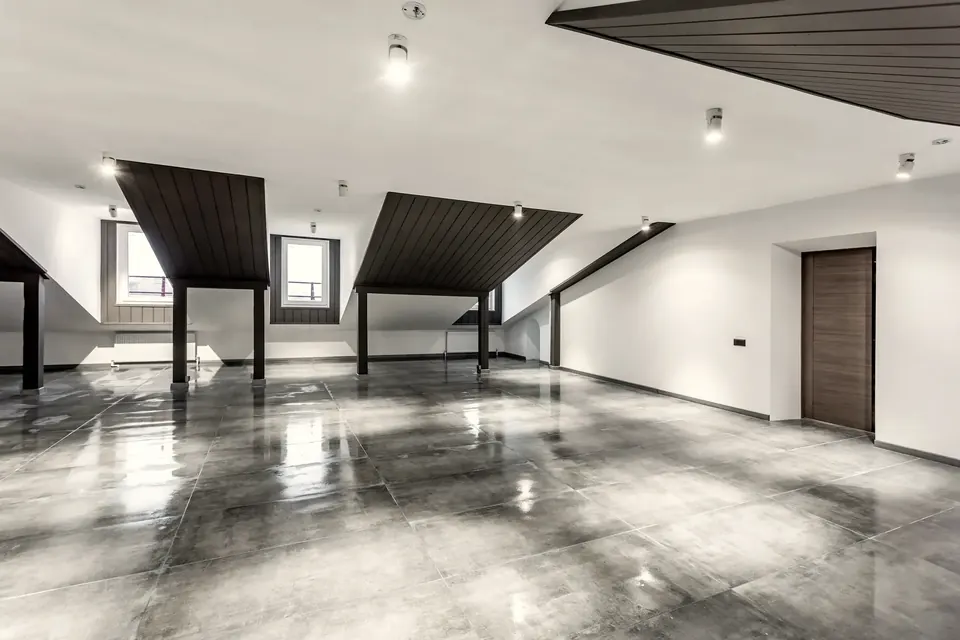
Light grays and silvers with white veining. They brighten windowless rooms and pair well with modern, minimal interiors and stainless or black fixtures.
Free on-site estimate
Tell us about the floor. We'll handle the rest.
Four quick fields. We'll follow up to schedule a visit, look at the slab in person and give you a written price for the system that suits it.
Metallic epoxy flooring
Metallic epoxy is part flooring, part craft. Pearlescent pigments are worked by hand into wet resin, creating depth, swirls and soft reflections that no two floors share.
01Overview
Most flooring comes in a box. Metallic epoxy is mixed and placed on site, and the final look depends on the colors chosen, the way the material is spread and the techniques used while it is still workable. That makes it one of the most distinctive floors you can put in a home or business.
Metallic systems use a clear or tinted epoxy loaded with fine metallic and pearlescent pigments. As the resin flows across the floor, the pigments settle and shift, creating variations in tone and reflectivity. Installers guide that movement with rollers, trowels, sprayed solvents and other tools to create effects that range from subtle, cloud-like marbling to bold, veined patterns that resemble polished stone or flowing water.
Around Menomonee Falls, we see metallic floors chosen most often for finished basements, home bars, lower-level entertainment spaces, collector-car garages, salons, boutiques and office lobbies. These are places where people spend time and the floor is meant to be noticed.
Because metallic epoxy is a smoother, glossier surface than flake, it requires a flatter slab and more careful preparation. Every flaw that would disappear under a flake broadcast can show through a metallic finish, so grinding and patching get extra attention.
02Looks & palettes
These are starting points. Every metallic floor is mixed for the space, and we build sample boards before committing to a full room.
CoolLight grays and silvers with white veining. They brighten windowless rooms and pair well with modern, minimal interiors and stainless or black fixtures.
 Warm
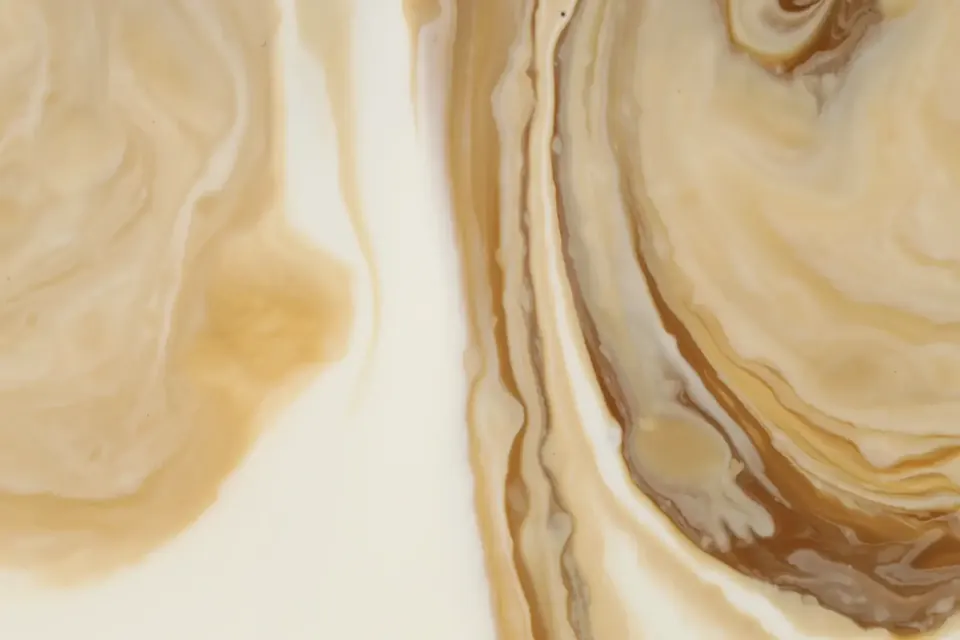
Warm tones that complement wood trim, leather furniture and the kind of lower-level bar where people linger. They feel inviting rather than clinical.
 Dramatic
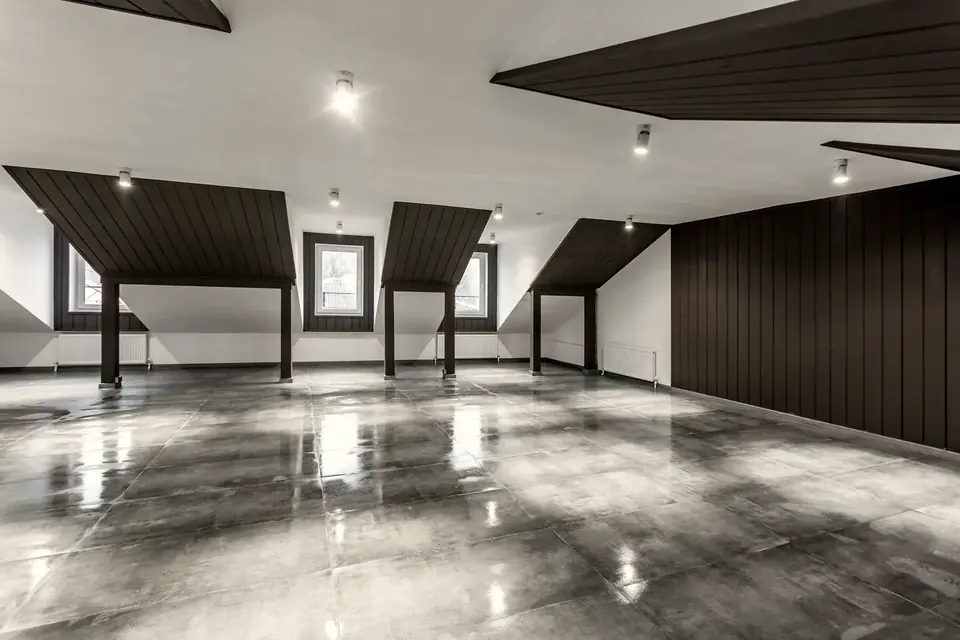
Deep grays and blacks with lighter movement look striking in showrooms, studios and garages with bright lighting. Dark floors do show dust more readily.
03Why metallic
In a lobby, a salon or a basement bar, a metallic floor carries the room without adding clutter. It reflects lighting, gives a sense of depth and starts conversations. It also stays seamless and easy to clean, which most other statement floors cannot say.
04The craft
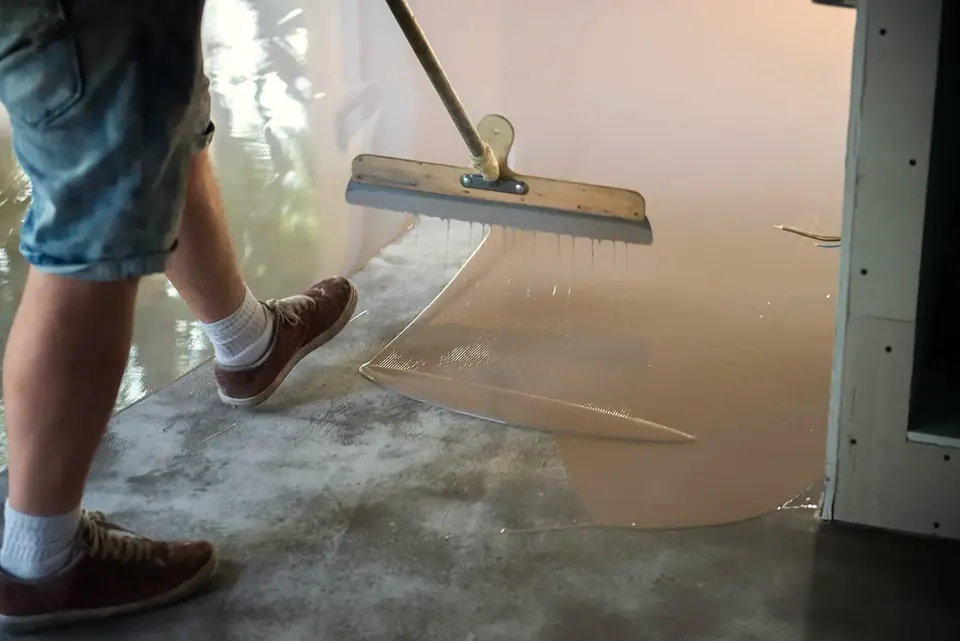
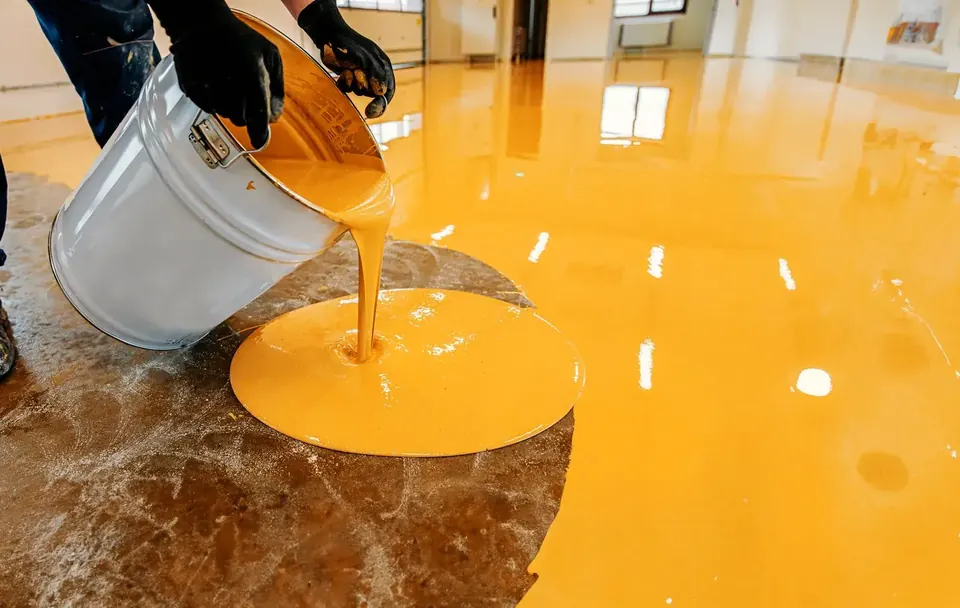
A metallic floor is installed in a single continuous session for each area, because the effect has to be created while the resin is fluid. The crew mixes batches, pours ribbons of color, spreads them to an even depth, and then manipulates the surface. Timing matters: too early and patterns blur away, too late and tool marks remain.
This is why we discuss expectations in detail. You will approve a sample board, but the full floor will vary from it, because the material responds to the size of the room, the slab temperature and the movement of the tools. That variation is the point, and it is why metallic floors look handmade instead of printed.
05Benefits
No two floors match. Colors, movement and contrast are tailored to your room and your taste.
The pearlescent surface bounces light deep into a room, which helps lower levels and interior spaces with few windows.
No grout, no seams. Spills wipe up and the surface can be mopped without special products.
A clear protective topcoat adds scratch, chemical and UV resistance over the decorative layer.
Bonds directly to properly prepared concrete, with no floating layers or adhesives underneath.
Suitable for lobbies, boutiques, salons, offices and showrooms that want a high-end look with practical upkeep.
06Installation
Most rooms take three to four days from grinding to final topcoat, depending on size, repairs and cure conditions.
We discuss colors and effects, then make sample boards so you can see the look before committing.
Grinding, crack repair and skim coating where necessary create a flatter, smoother base than other systems need.
A primer seals the concrete, followed by a tinted base coat that sets the underlying tone and prevents outgassing bubbles.
The metallic epoxy is mixed, poured and worked in one session per area to create the movement and depth.
A clear topcoat in the sheen you choose adds durability. Texture can be added in walkways where needed.
07Local considerations
Metallic is often chosen for its looks, but local conditions still shape how we install it.
Metallic floors are often installed in lower levels, so moisture testing and, if needed, a moisture-tolerant primer come first. A blister in a metallic floor is very visible.
Metallic resin needs steady temperatures to flow and level properly. We control heat and airflow in the space before and during the pour, especially in winter.
Metallic garage floors are beautiful but smooth. We add texture to the topcoat near the door and recommend mats, since snowmelt on any glossy floor reduces traction.
Control joints and cracks in the slab can telegraph through a continuous pour. We discuss whether to honor, fill or design around them before we start.
08Living with it
Plan the lighting with the floor. Metallic finishes respond to every fixture in the room.
A metallic floor looks different at noon than it does at night, and different again under warm LED cans than under cool shop lights. Before we finalize colors, we ask what lighting the room has or will have. Recessed lights create bright highlights and pools of reflection. Linear fixtures stretch long streaks of light across a glossy surface. Natural light from a walkout basement door changes the color temperature through the day. None of these are problems, but they do shape which palette looks best.
Day to day, a metallic floor is easy to live with. Dust-mop or use a soft vacuum head to pick up grit, since fine sand is the main cause of surface scratches. Damp-mop with clean water and a small amount of pH-neutral cleaner. Skip vinegar, citrus degreasers and anything abrasive. Put walk-off mats at doors, especially a basement walkout or a garage entry, and felt pads under chairs and bar stools.
Over years of use, high-traffic paths may lose a little gloss compared with the edges of the room. That is a topcoat issue, not a problem with the decorative layer underneath. The fix is to clean, lightly abrade and apply a fresh clear coat, which restores the shine without touching the metallic pattern. Planning for that kind of maintenance is part of why we always finish metallic floors with a dedicated protective topcoat.
Metallic floors cost more than flake or solid-color systems. They need more slab preparation, more material, more time for samples and an experienced crew on pour day. In exchange you get a floor nobody else has. We price every metallic project after seeing the slab, and the quote spells out prep, repairs, layers and topcoat.
09Questions
Metallic floors are custom work, so questions are welcome at every step, including these.
Ask us directlyThe palette and overall character will match, but not every swirl. Metallic floors are created by hand in the moment, and the full room will have its own movement. Most people find that is the appeal.
High-gloss finishes can be slick when wet. For living areas, a satin topcoat helps. In garages, entries and commercial walkways, we add fine anti-slip media to the topcoat. It slightly reduces depth but improves traction.
Glossy surfaces of any kind pick up fine scratches eventually, and tracked-in grit is the usual culprit. A quality topcoat greatly improves scratch resistance, and floors can be recoated later to refresh the surface. Felt pads on furniture and entry mats help.
Yes, and it looks spectacular with good lighting. It is a better fit for collector cars and display garages than for a daily driver in heavy salt season. For everyday garages, flake is usually the more practical choice.
Epoxy itself can amber with UV exposure. We protect metallic floors with a UV-stable topcoat, which matters most in rooms with sunlight or near garage doors.
Often, yes. We can tint base coats and choose metallic pigments to complement brand colors. We make samples for approval before installation.
11Free estimate
Tell us about the room and the look you are after. We will inspect the slab and make samples so you can see your floor before it is poured.