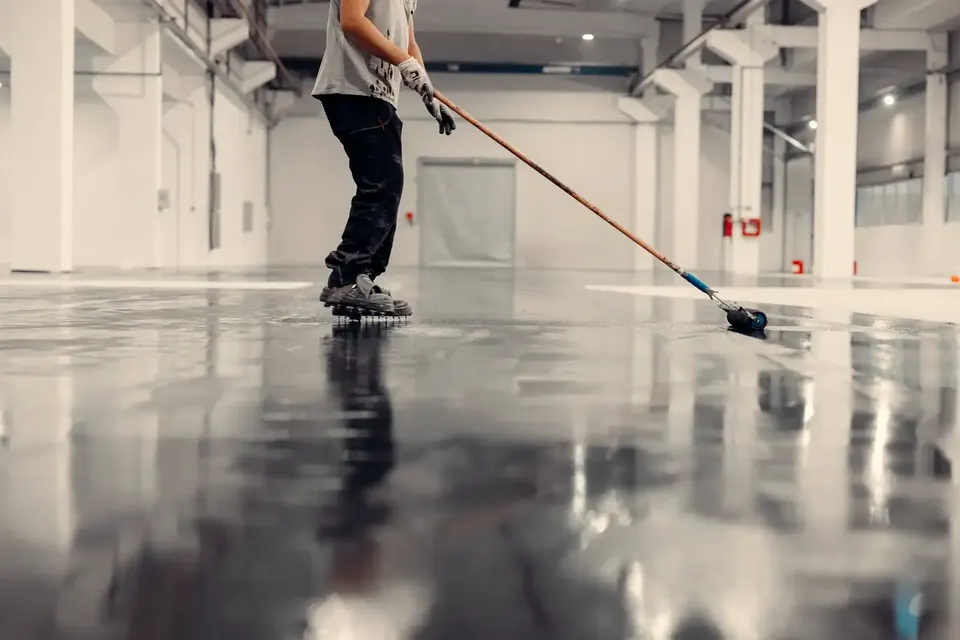
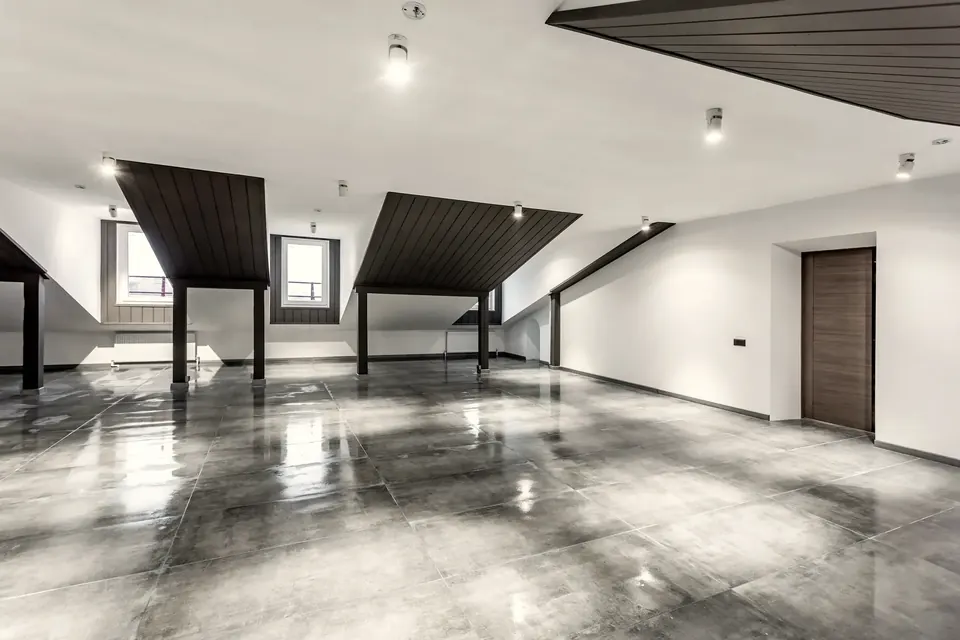
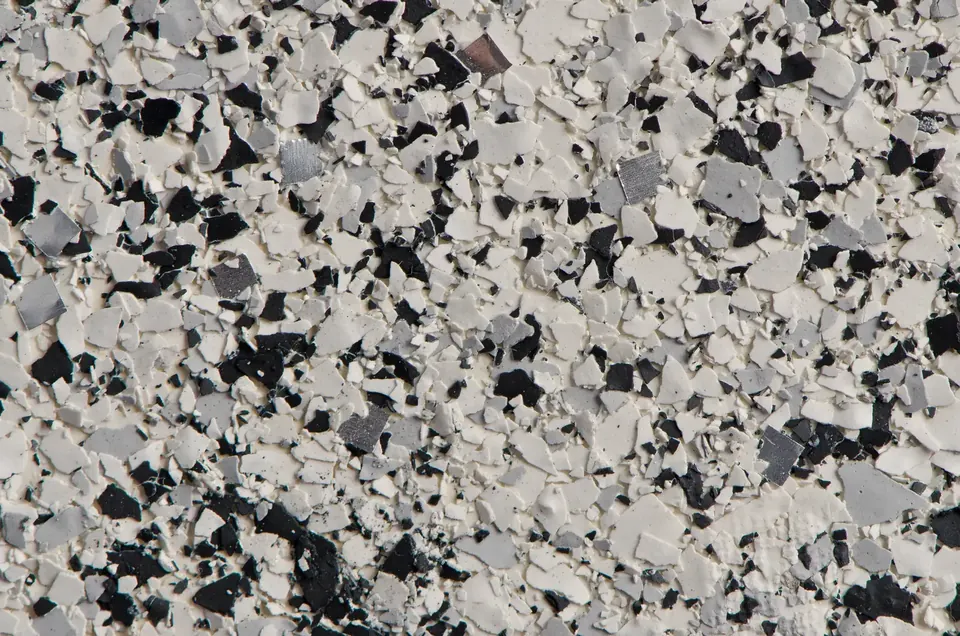
 Cool tones
Grays & granites
Black, white and gray mixes are the most common garage choice. They pair with almost any exterior color and do a great job hiding road grime and winter salt.
Free on-site estimate
Tell us about the floor. We'll handle the rest.
Four quick fields. We'll follow up to schedule a visit, look at the slab in person and give you a written price for the system that suits it.
Decorative flake flooring
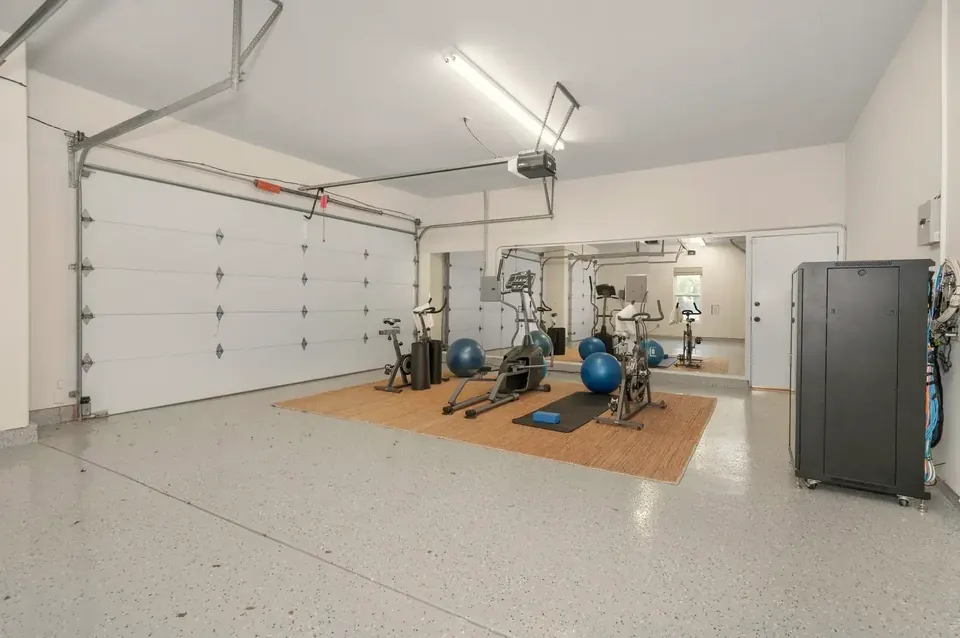
Flake floors are the most requested finish we install, and for good reason. A full broadcast of colored chips hides dirt, adds traction and gives concrete a granite-like look that holds up to Wisconsin garages.
01Overview
Installers also call it a chip floor or a broadcast floor. Picture three layers: tinted resin bonded to freshly ground concrete, a blanket of colored vinyl chips tossed by hand into that resin until none of it peeks through, and a clear wear coat on top. Between the second and third layers, the crew scrapes down any chips standing on edge and vacuums up the loose ones so the clear coat lies flat.
The result looks a bit like terrazzo or speckled granite. Up close you see individual chips in two to five colors. From across the room it reads as a single blended tone: warm tan, cool gray, charcoal, or something more distinctive if you want it.
That speckled surface is the reason flake floors are so popular in garages around Menomonee Falls. Road-salt haze, sand and tire scuffs get lost in the speckle, where on a plain gray floor they would be the first thing you notice. The chips also give the topcoat a subtle texture that improves traction when the floor is wet.
Flake floors are not only for garages. They work well in basements, laundry rooms, workshops, locker rooms, veterinary clinics and light commercial spaces. Anywhere you want a durable floor that does not show every footprint, a flake system is worth considering.
02Blends & sizes
Manufacturers offer dozens of standard blends, and custom mixes are possible. We set full-size sample boards right on your slab, so you are judging color under your own bulbs.
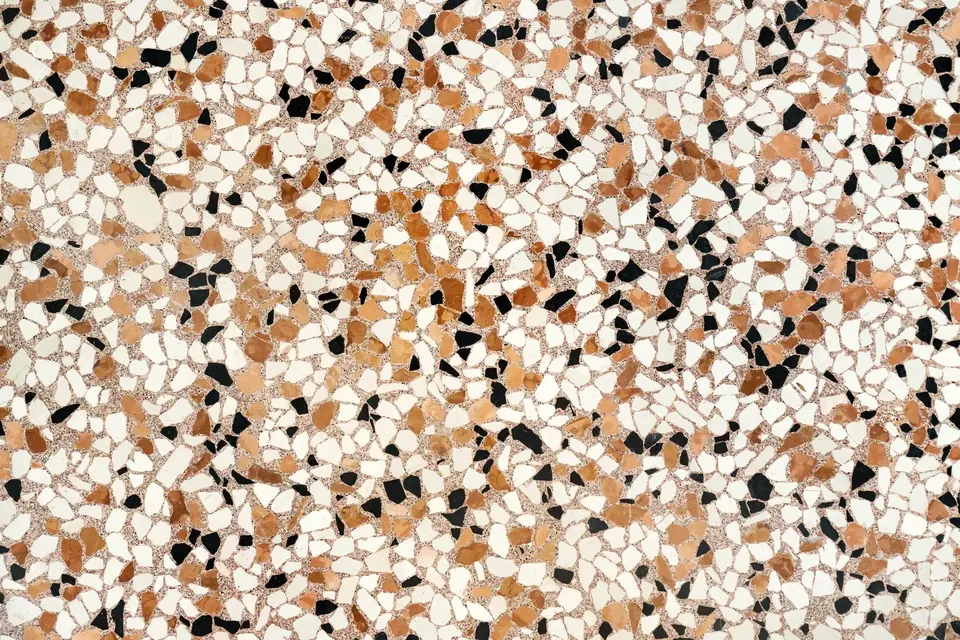
Cool tonesBlack, white and gray mixes are the most common garage choice. They pair with almost any exterior color and do a great job hiding road grime and winter salt.
 Warm tones
Browns, creams and tans feel warmer and suit homes with brick, wood or beige siding. They also hide the reddish dust that clay soils and some driveway sealers leave behind.
 Accent
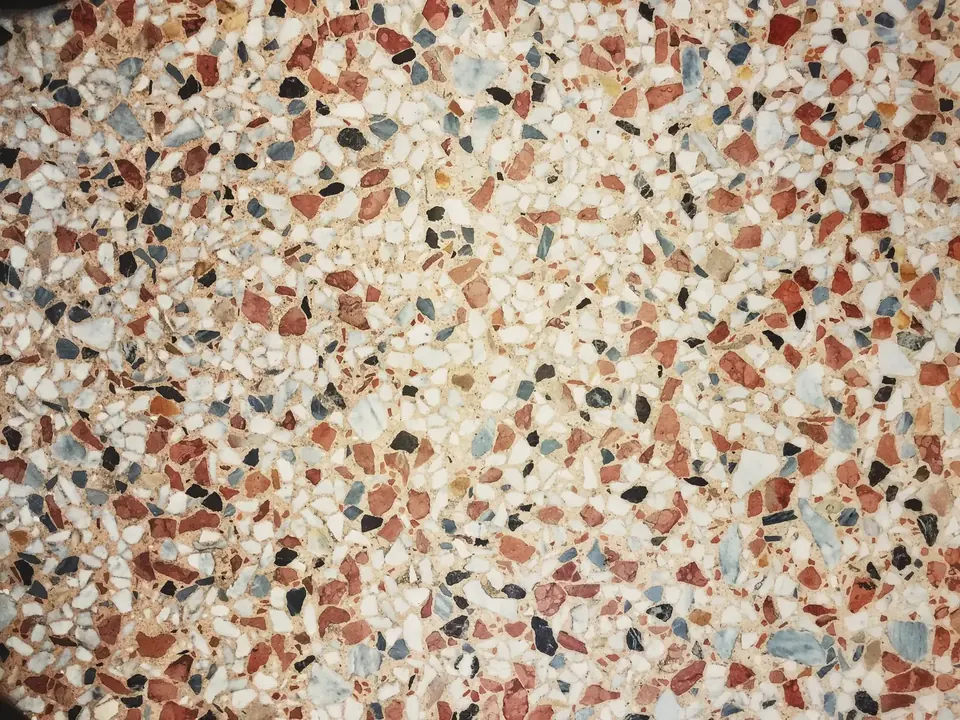
Want a hint of blue for a sports room or a branded color for a business? Accent chips can be mixed into a neutral base to add personality without going overboard.
03How it is built
Chip size, broadcast density and topcoat thickness all change how the floor looks and feels.
Most of what makes a flake floor last is invisible once it is finished. Here is what goes into a typical residential system.
The base coat bonds to the ground concrete. For garages, we often use a polyurea or a high-solids epoxy depending on temperature, slab condition and how quickly you need the space back. It is tinted to match the overall tone of the flake so any small gaps between chips are not noticeable.
We broadcast flake to rejection, meaning we keep adding chips until the base coat cannot hold any more. A full broadcast gives the most even look and builds thickness. Partial broadcasts, where some base color shows through, are possible, but they leave more solid area that shows wear and dirt.
Quarter-inch flakes are the standard choice for garages and give a classic speckled look. Smaller sizes create a finer, more granite-like appearance that suits interiors and smaller rooms. Larger chips are more dramatic.
After scraping, a clear topcoat locks the chips in. One thin coat leaves a pronounced texture with more grip. A heavier coat or a second coat fills in the texture for a smoother, glossier floor that is easier to mop. We typically use a UV-stable polyaspartic so the floor does not amber in a garage that gets afternoon sun.
04Good to know
Kids, dogs, bikes, lawn equipment and a car that comes in wet five months a year. A full-broadcast flake floor is built for exactly that kind of life, and it still looks tidy between cleanings.
05Benefits
The multicolor pattern camouflages dust, salt residue and small scuffs, so the floor looks cleaner between cleanings.
Chips create a slightly raised surface that helps shoes and tires grip, and the texture can be adjusted with the topcoat.
A full broadcast adds material and impact resistance compared with a simple two-coat color floor.
Repaired cracks, patched spalls and slight surface variations blend in much better under a busy pattern.
Vinyl flakes and a UV-stable topcoat keep the floor looking consistent, even near an often-open overhead door.
With so many blends available, it is easy to find one that matches your cabinets, siding or commercial interior.
06Applications
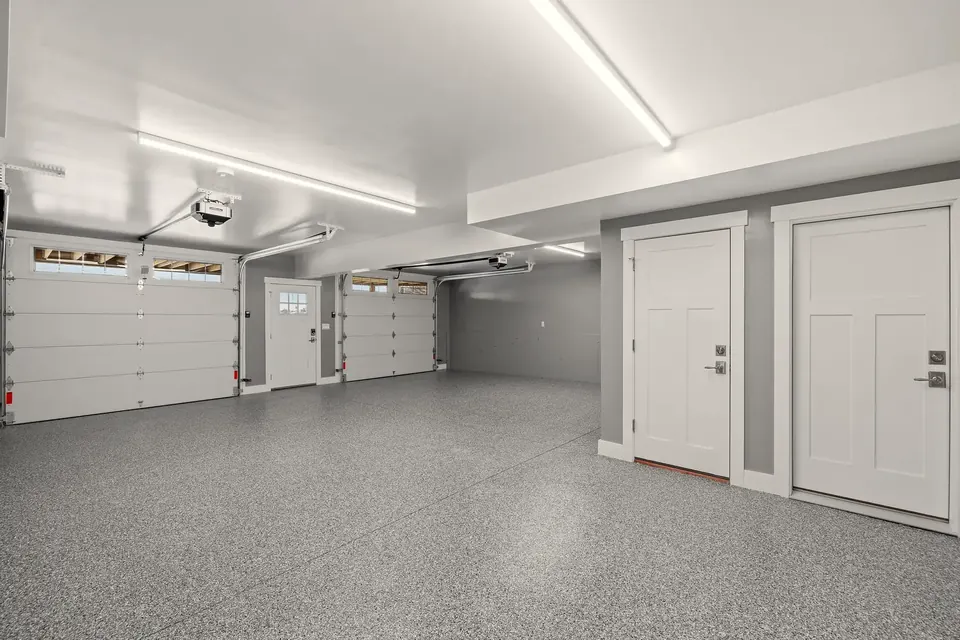
Garages are the obvious fit, but the same strengths apply wherever a floor sees grit, water and steady traffic and you would rather not stare at every mark.
In commercial settings, flake systems are popular in spaces that need a clean appearance without the maintenance of a high-gloss solid floor. They also suit spaces where some slip resistance is important but an aggressive industrial texture would be too much.
07Installation
Diamond grinding with dust extraction creates the surface profile the base coat needs and removes old coatings and contaminants.
Cracks, pits and joints are filled. Because the pattern hides repairs well, flake floors are a good choice for older slabs.
We apply the tinted base coat in sections and broadcast flake by hand to full coverage while the resin is wet.
After cure, loose and standing chips are scraped flat and the floor is vacuumed thoroughly so the topcoat goes on smooth.
The topcoat locks in the chips and sets the final texture. We can add anti-slip media for entries and ramps.
08Wisconsin considerations
A few local details that affect how we build flake floors for Menomonee Falls homes and businesses.
Melting snow makes any smooth floor slick. We generally leave more chip texture in garages and entries here than we would in a warm climate.
Dried salt brine leaves white haze. On a gray or tan blend, it is much less obvious than on a solid dark floor, and it rinses off easily.
In unheated garages, we choose base coats rated for cooler cure temperatures and, where helpful, flexible polyurea to handle seasonal movement.
West-facing garages can get strong afternoon sun. A UV-stable topcoat keeps the area near the door from discoloring compared with the back of the room.
09Questions
Most flake questions are about looks and grip. If yours is not here, send it along.
Ask us directlyLess so than a smooth, solid-color floor. The chips create texture, and we can make the floor grippier with a thinner topcoat or an anti-slip additive. Any floor can be slippery with standing water or snow on it, so mats at entries are still a good idea.
Start with the setting. Gray blends suit most garages and modern homes. Tan and brown blends suit warmer exteriors and hide clay-tinted dirt. We bring large sample boards so you can see them on your floor, in your light, next to your cabinets or walls.
Yes. Because of the pattern, localized repairs on a flake floor blend in better than on a solid color. A gouged area can be ground out, rebroadcast with the same blend and recoated.
Not when the system is installed properly. Each chip is partly buried in the base resin and capped by the clear coat. Loose chips usually indicate a skipped scrape, too little topcoat, or wear in a very high-traffic area that needs a maintenance recoat.
A partial broadcast scatters chips over a solid base so the color shows between them. It uses less material but shows dirt and wear more. A full broadcast covers the base completely, adds thickness and gives a more even, durable surface. We recommend full broadcast for most garages.
Yes. Flake systems are common in break rooms, restrooms, locker rooms, grooming salons, retail back-of-house and light industrial areas. For commercial use we adjust the topcoat thickness and texture to match cleaning methods and slip-resistance needs.
11Free estimate
We will bring sample boards, inspect your slab and help you choose a blend and texture that suit the space.