Stops salt damage
A sealed surface keeps chloride brine from soaking in and refreezing. It is the most practical way to slow the scaling that wrecks garage aprons in our climate.
Free on-site estimate
Tell us about the floor. We'll handle the rest.
Four quick fields. We'll follow up to schedule a visit, look at the slab in person and give you a written price for the system that suits it.
Garage floor coatings
Salt brine, sand and snowmelt ride into the garage on every car from November to March. We seal the slab against all of it with a coating system built for hot tires, cold mornings and the occasional dropped wrench.
01Overview
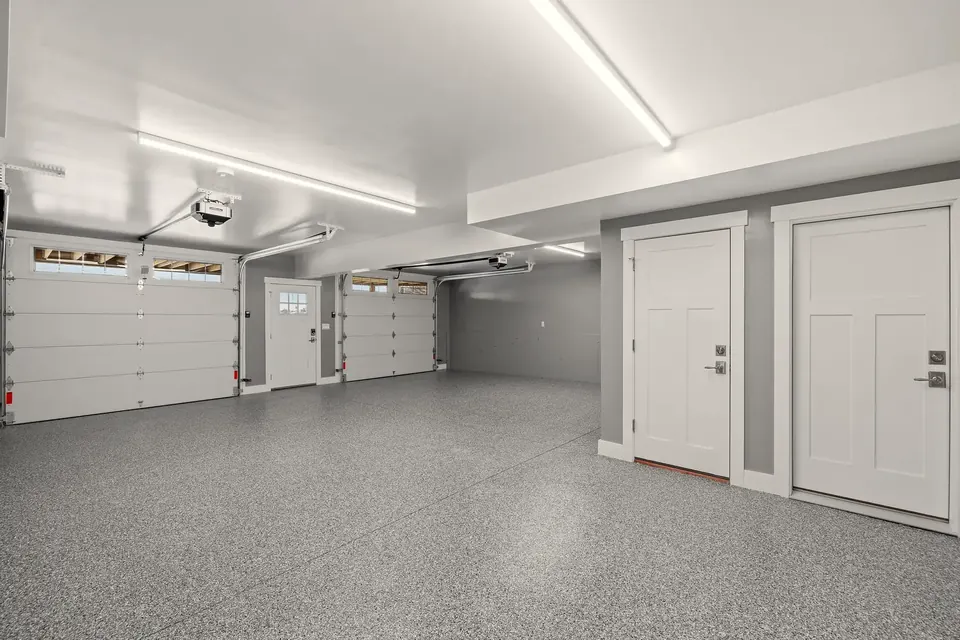
Your garage floor is the hardest-working concrete on the property, and in this part of Wisconsin it also takes more abuse than almost any other surface around the house. Each winter it collects a mix of chloride brine, grit and meltwater that soaks into bare concrete. When temperatures fall at night, that moisture freezes in the pores and expands. Repeat the cycle enough times and the surface starts to flake, pit and scale, usually first near the overhead door where the slush lands.
A garage floor coating puts a continuous, non-porous layer between the concrete and everything that drips off your vehicle. Salt water pools on top, where you can push it out the door with a squeegee. Oil drips wipe up instead of staining. Concrete dust stops getting tracked into the house. And the room itself becomes brighter and easier to use as a workshop, gym or storage space.
The coating, though, is only part of the job. The system we put down and the way we prepare the slab beneath it determine whether the floor looks good for a season or for many years. That is why every garage project starts with an in-person look at the concrete: its age, any old paint or sealer, cracks and spalls, oil saturation, and whether moisture is coming up from below.
From there, we recommend a system and explain it in plain terms. For most attached garages in Menomonee Falls that means a diamond-ground slab, repaired cracks, a penetrating base layer, vinyl chips spread wall to wall, and a UV-stable polyaspartic clear coat. Detached and unheated garages, older slabs and heavy-use shop garages may call for something different, and we will tell you why.
02Benefits
A sealed surface keeps chloride brine from soaking in and refreezing. It is the most practical way to slow the scaling that wrecks garage aprons in our climate.
Slush, oil, coolant and lawn chemicals stay on top. A squeegee, a mop and mild cleaner handle almost everything. No more scrubbing stains out of raw concrete.
Flake broadcasts and textured topcoats give your boots something to hold onto when the floor is wet from melting snow, which is exactly when you need it.
Light flake blends and gloss topcoats reflect overhead light, so a garage that felt like a cave starts to feel like part of the house.
Cheap coatings lift when warm tires roll in and grab the surface. Properly bonded systems with the right topcoat are built to stand up to that.
A coated floor makes the garage usable for workouts, hobbies and projects. When the house goes on the market, it is a detail buyers tend to remember.
03Finish options
Garages lean practical, but you still have choices. Each of these finishes can be built on the same durable base system.
 Most popular
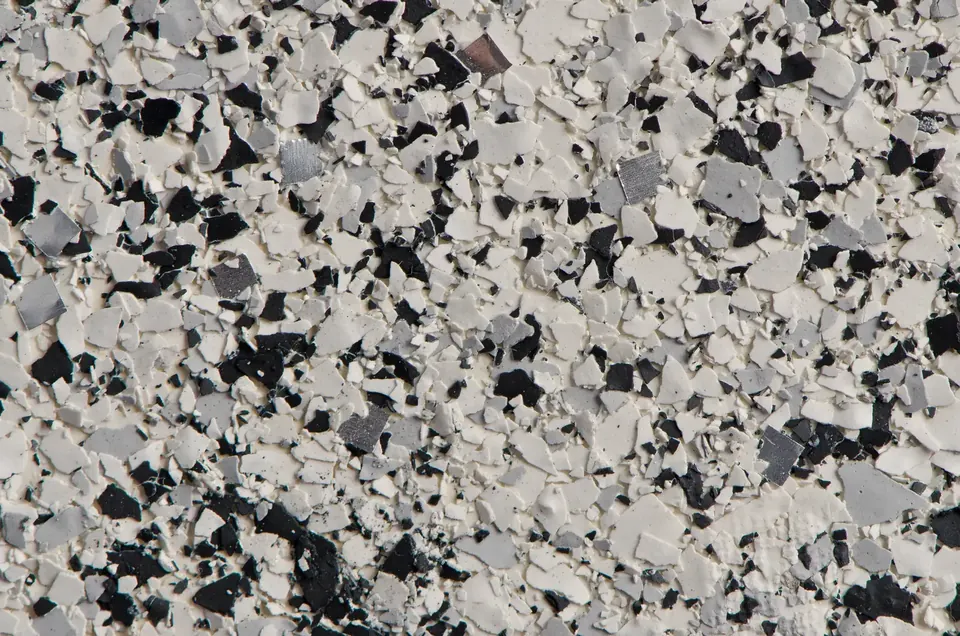
Colored vinyl chips are scattered into the wet base coat until it is completely covered, then sealed. The speckled pattern hides dust, salt residue and tire marks, and the chips add texture. Gray and tan blends are the most common choices for garages here.
 Clean lines
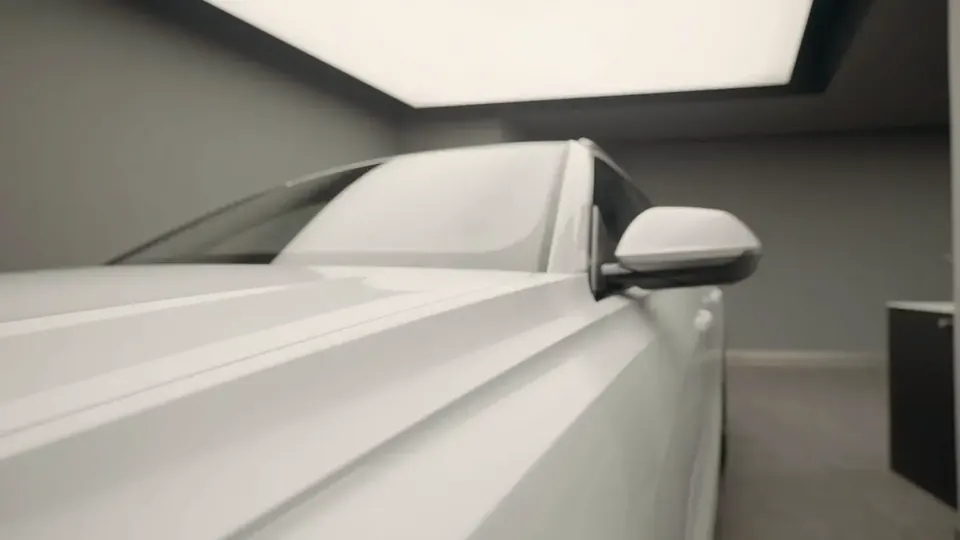
A single pigmented color, often gray or tan, with an anti-slip additive in the topcoat. It has a crisp, modern look and suits garages used as workshops where you want to spot dropped screws easily.
 Showpiece
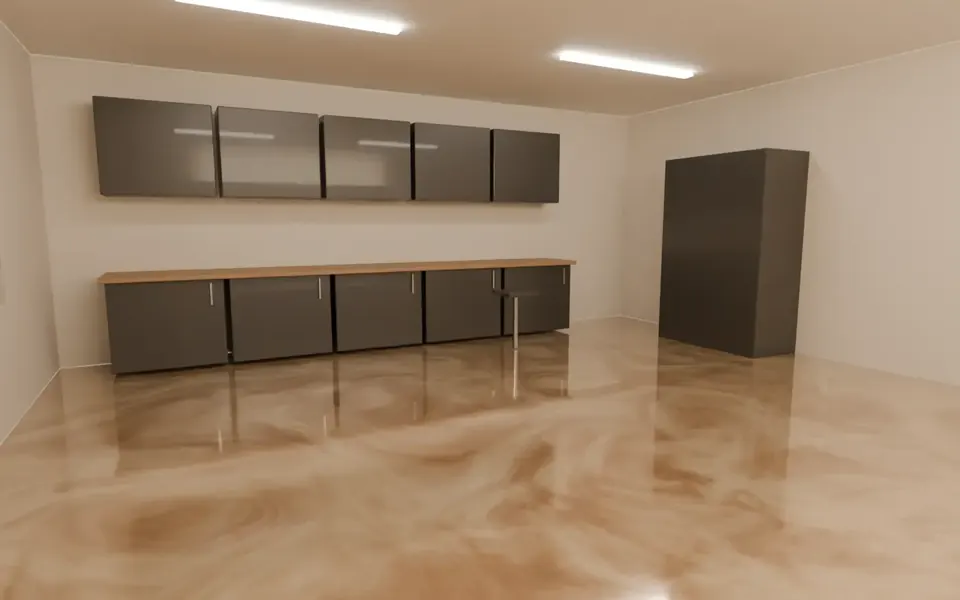
For collector-car garages and display spaces. Metallic pigments create a flowing, three-dimensional look. It is smoother than flake, so we add texture where people walk. More on metallic floors.
04Applications
A coating plan depends heavily on how the garage is built and used. An attached, heated two-car garage on a newer slab is the simplest case. A detached garage from the 1950s with a cracked apron and years of paint on the floor needs more prep and a more forgiving base coat.
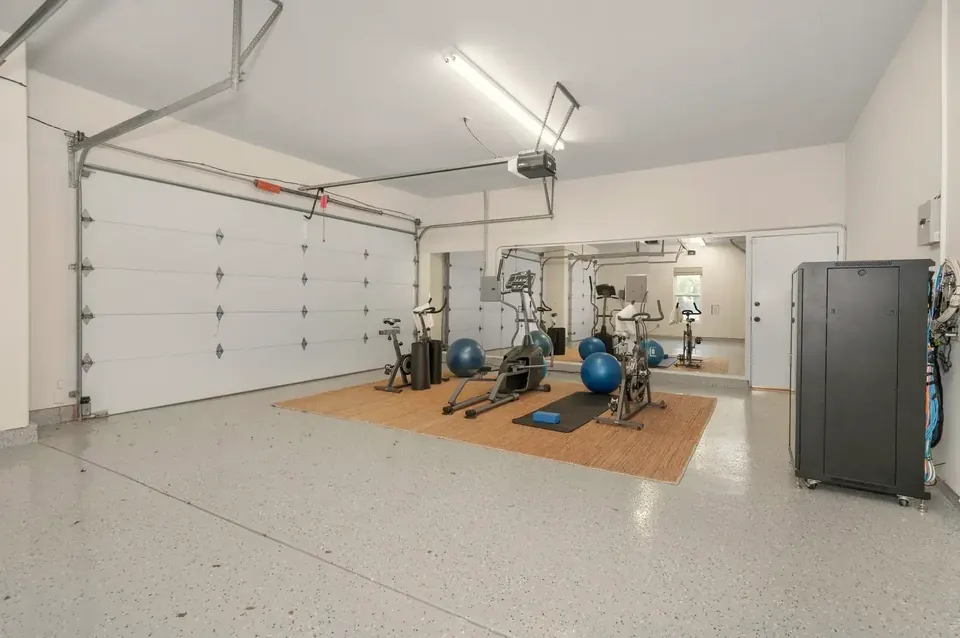
We also see plenty of garages doing double duty: a gym in one stall, a workbench along the back wall, a snowblower and a riding mower parked for the season. We plan texture, color and thickness around those uses so the floor works for everything you do in the space.
05Installation
A typical two-car garage is finished in one to three days depending on the system, repairs and temperature. Here is what happens on site.
You empty the garage, and we mask walls, door seals and the threshold into the house. Plastic barriers keep dust where it belongs.
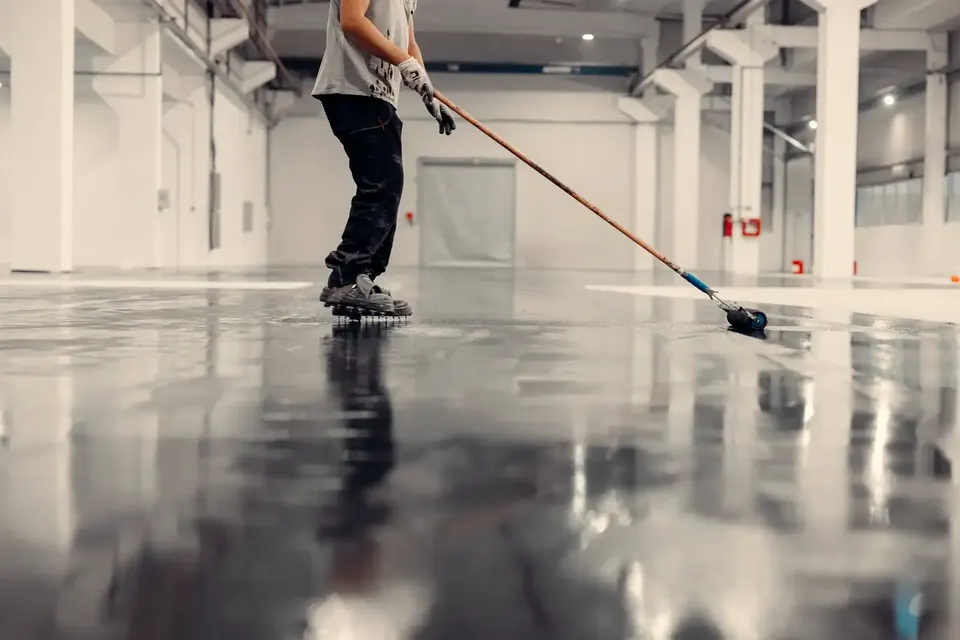
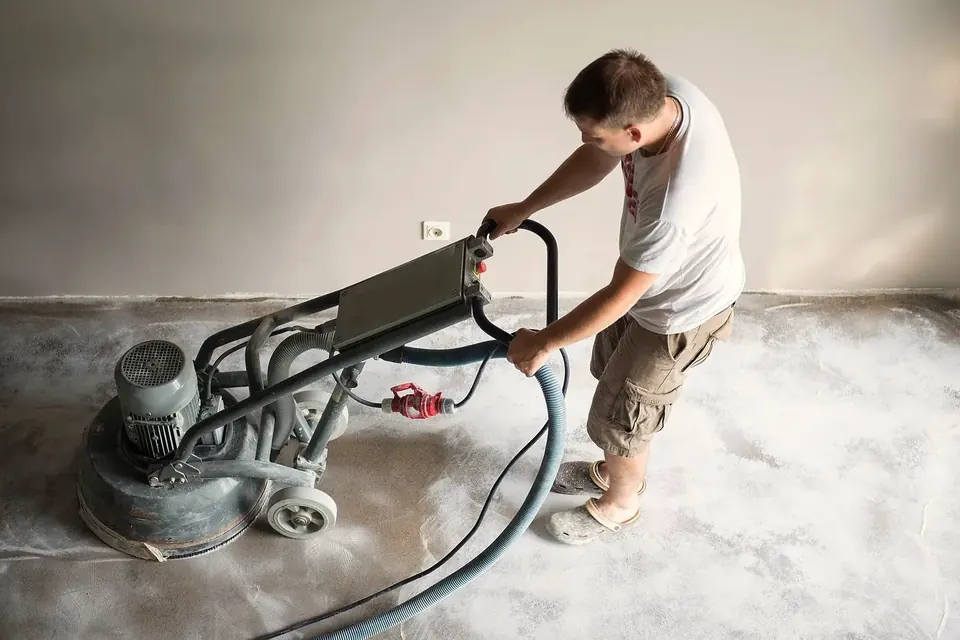
We grind the whole slab with dust-collecting equipment to remove the weak surface layer, old coatings and staining, and to open the pores.
Cracks are chased and filled, spalls at the apron are rebuilt and control joints are addressed. Repairs are ground flush.
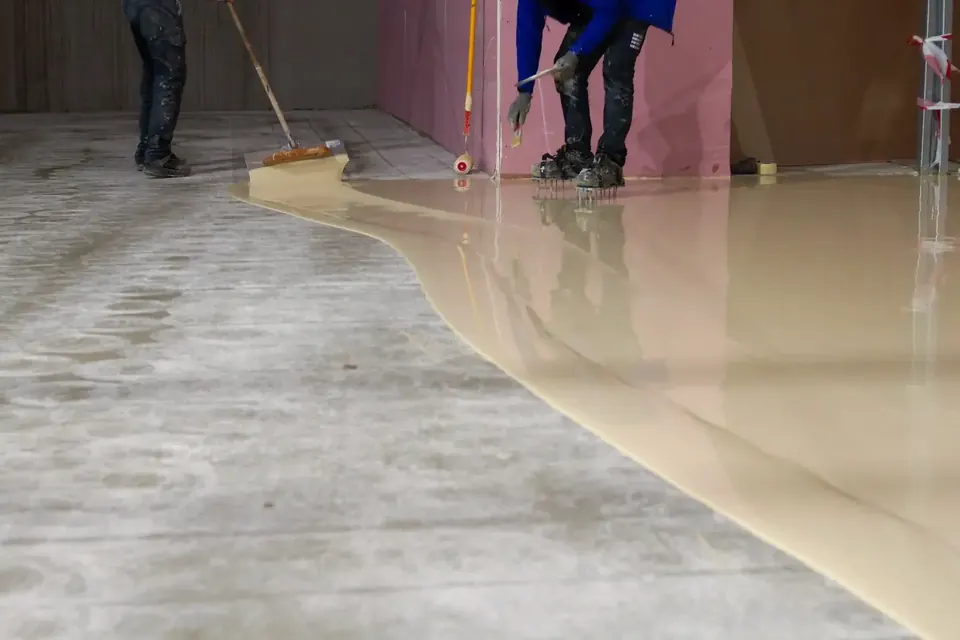
The base coat is rolled in, carried up the stem wall if you choose a cove, and flake is broadcast into it while it is still wet.
Loose chips are scraped and vacuumed, then a clear topcoat locks everything in and sets the final texture and sheen.
06Professional vs. DIY
Big-box garage kits are tempting. They cost less, and the box photo looks great. The trouble is that most kits rely on an acid etch for preparation, use thin water-based epoxy, and skip a true topcoat. On a Wisconsin garage floor, that combination often lifts under hot tires within a year or two, especially near the door.
Professional systems differ in three ways that matter. The slab is mechanically ground, so the coating penetrates and grips. The materials are higher in solids, so they build a real film instead of a thin paint. And the topcoat is chosen to resist abrasion, chemicals and UV. Add proper crack repair and controlled cure conditions, and you have a floor that behaves very differently over time.
07Wisconsin considerations
These are the local factors that shape every garage system we specify in Menomonee Falls and nearby communities.
The first few feet inside the door gets the most brine and the widest temperature swings. We inspect it closely, repair scaling, and make sure the coating terminates cleanly at the edge so water cannot get underneath.
An unheated slab goes through more freeze-thaw cycles than one attached to a heated house. A flexible polyurea base coat handles that movement better than a rigid epoxy alone.
Many garages have floor drains or slope toward the door. We protect drain openings and avoid building up material in ways that change how meltwater runs off.
Garage work continues through winter when we can bring the slab into the right temperature range. We heat the space, check the slab with an infrared thermometer, and choose cold-tolerant products.
08Questions
Garage owners usually ask these before anything else. Have another? Ask when we visit.
Ask us directlyUsually not. Old coatings that are peeling or poorly bonded need to be ground off. Anything coated over a loose layer inherits that layer's weak grip. If an older coating is well bonded we will discuss whether it can be prepared and overcoated, but in most cases removal is the reliable route.
On systems finished with a fast-cure polyaspartic, foot traffic is often fine within hours and vehicles can return in a few days, depending on temperature. Full-epoxy systems take longer. We give you specific times for your floor when the job wraps up.
Quality topcoats are formulated to resist the chlorides in road salt. The real goal is to keep brine from reaching the concrete. We still recommend squeegeeing standing slush out regularly in winter, since anything left sitting for weeks makes cleanup harder.
We repair cracks before coating, and with flake systems the repairs blend in well. Cracks can reappear if the slab continues to move, which is common at control joints. We will point out any cracks that look active so expectations are clear.
We can. Carrying the coating three to six inches up the concrete stem wall creates a cove that is easier to clean and protects the spot where floor meets wall. Many people choose it, and it gives the room a finished look.
Sweep or dust-mop regularly, and use a squeegee to push out meltwater in winter. For deeper cleaning, use a soft-bristle brush or mop with a mild, non-acidic cleaner and rinse with clean water. Avoid harsh acids and abrasive pads.
10Free estimate
Tell us about your garage. We will come out, inspect the slab, bring flake samples and give you a written price.