Dust control
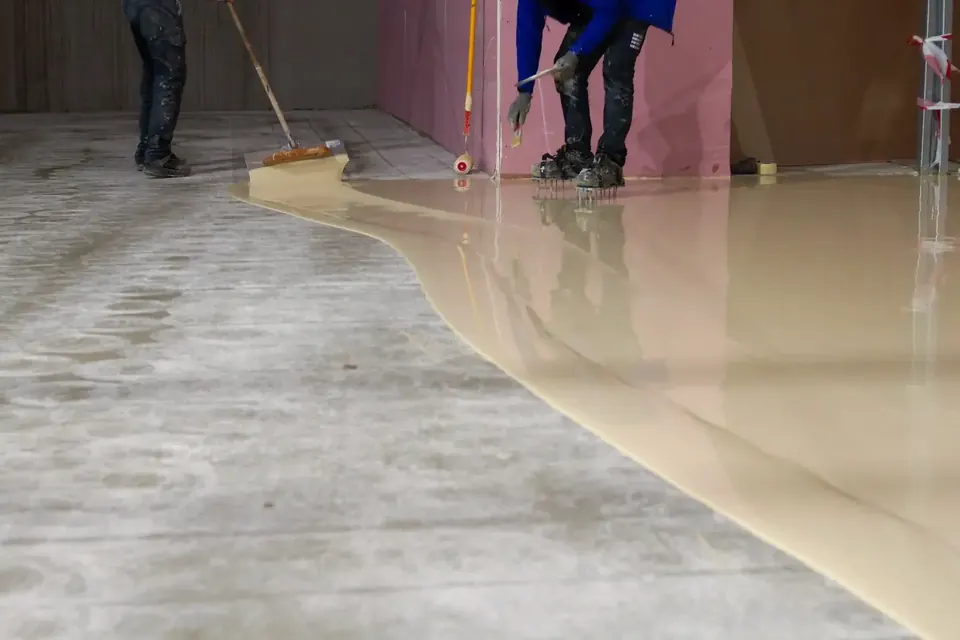
Sealing the slab stops concrete dusting, which keeps products, racks and equipment cleaner and reduces housekeeping.
Free on-site estimate
Tell us about the floor. We'll handle the rest.
Four quick fields. We'll follow up to schedule a visit, look at the slab in person and give you a written price for the system that suits it.
Warehouse floor coatings
Forklifts, pallet jacks, racking and steady traffic wear down bare concrete quickly. We coat warehouse, distribution and manufacturing floors with systems built for abrasion, chemicals and visibility.
01Overview
Menomonee Falls is home to a large concentration of manufacturing, warehousing and distribution facilities, many of them clustered in industrial parks near the Highway 41/45 freeway. Those buildings depend on concrete floors that take a beating every shift.
Bare concrete in an industrial building dusts, stains and wears into ruts. Dust gets into products and equipment. Oil, hydraulic fluid and coolant soak in and become slip hazards. Joint edges break down under forklift wheels, creating bumps that rattle loads and damage equipment.
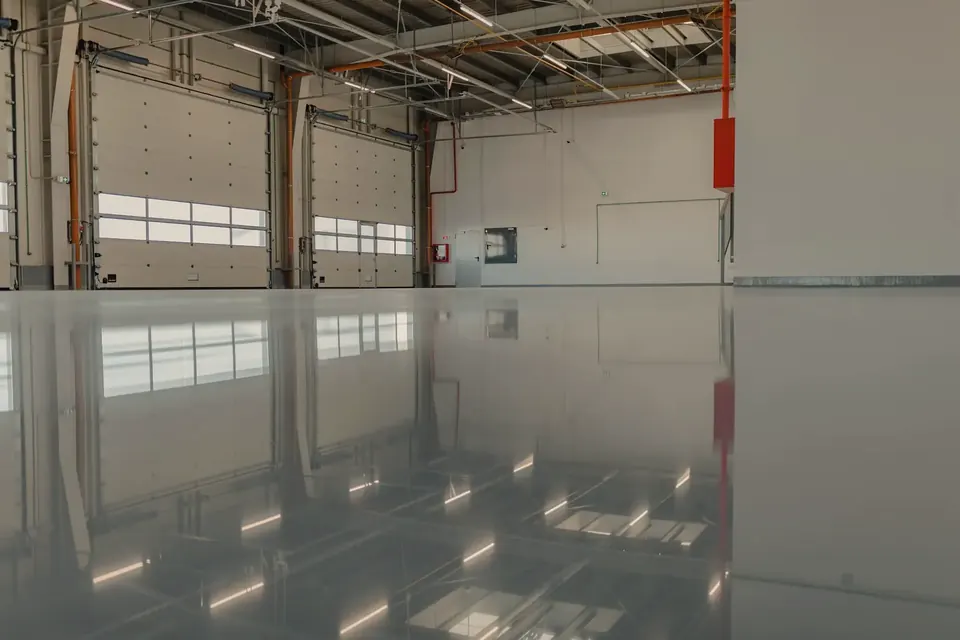
Warehouse floor coatings address all of those issues. Industrial epoxy systems create a dense, abrasion-resistant surface that seals dust, resists chemicals and is easier to clean with scrubbers. Bright colors improve light levels and visibility. Integrated line striping and color-coded zones support safety programs and organization.
Every industrial project starts with understanding your operation: traffic patterns, wheel types, chemicals, temperatures, cleaning methods and how much downtime you can afford. Then we build a system and schedule around those requirements.
We also look ahead. Facilities change layouts, add racking and bring in new equipment. When we know that a production line is likely to move in a year or two, we plan striping and zone colors so they can be adapted without recoating the whole floor.
02Benefits
Sealing the slab stops concrete dusting, which keeps products, racks and equipment cleaner and reduces housekeeping.
Thick, high-solids systems hold up to forklift tires, pallet dragging and constant traffic far better than bare concrete.
Systems can be specified for oils, fuels, hydraulic fluid, coolants and many cleaning chemicals.
Light-colored, reflective floors increase perceived light levels and help workers see obstacles and markings.
Striped aisles, pedestrian walkways and color-coded zones support organization and safety programs.
Smooth, sealed floors are faster to clean with auto-scrubbers and keep a professional look for audits and customer visits.
03Areas
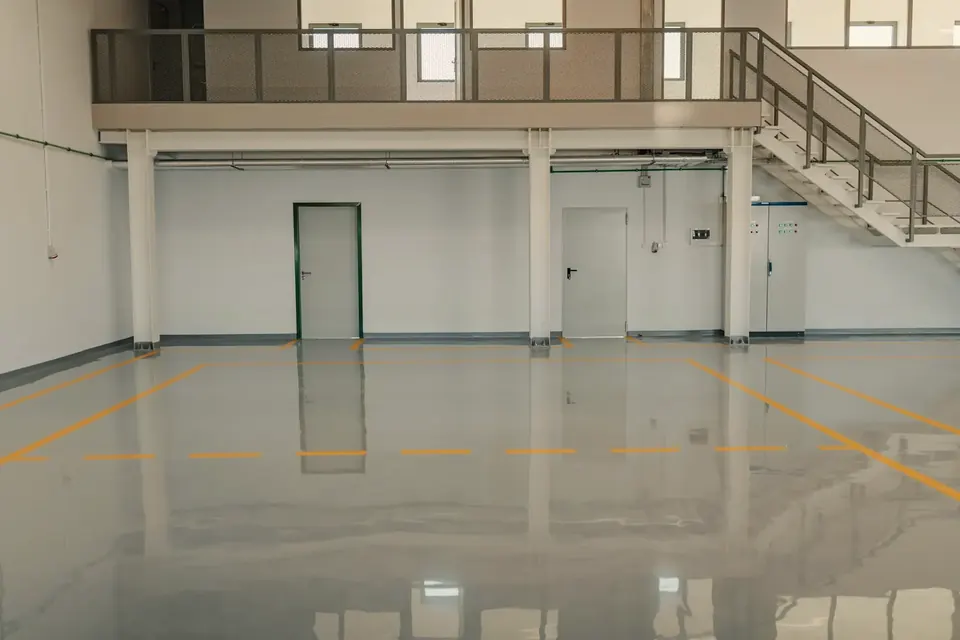
 Storage
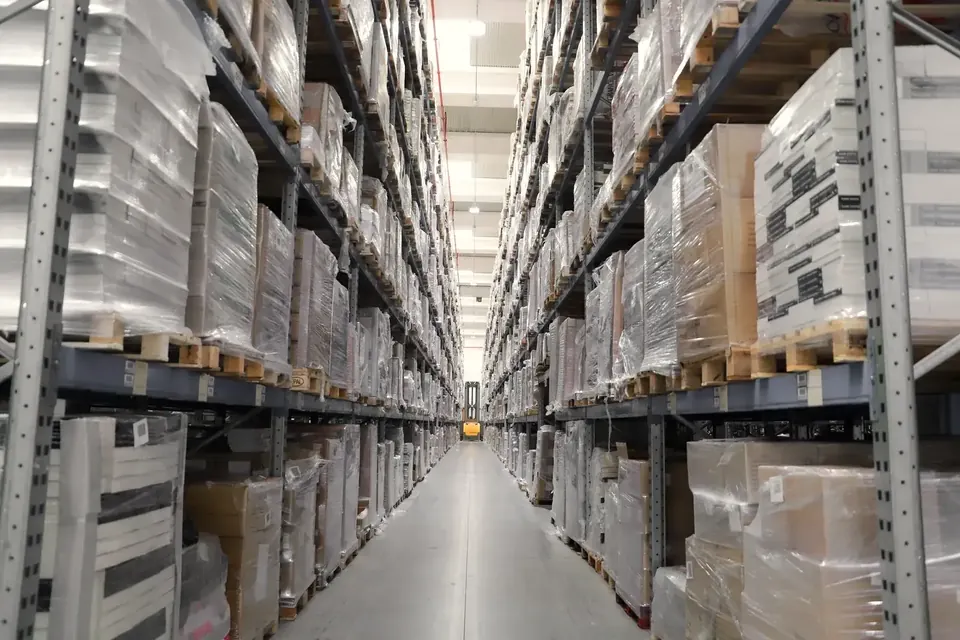
Smooth, durable surfaces for narrow-aisle and standard forklift traffic, with clearly marked aisles and rack bases.
ShippingHigh-wear areas with temperature swings at open doors, salt and moisture from trucks, and heavy turning traffic.
 Production
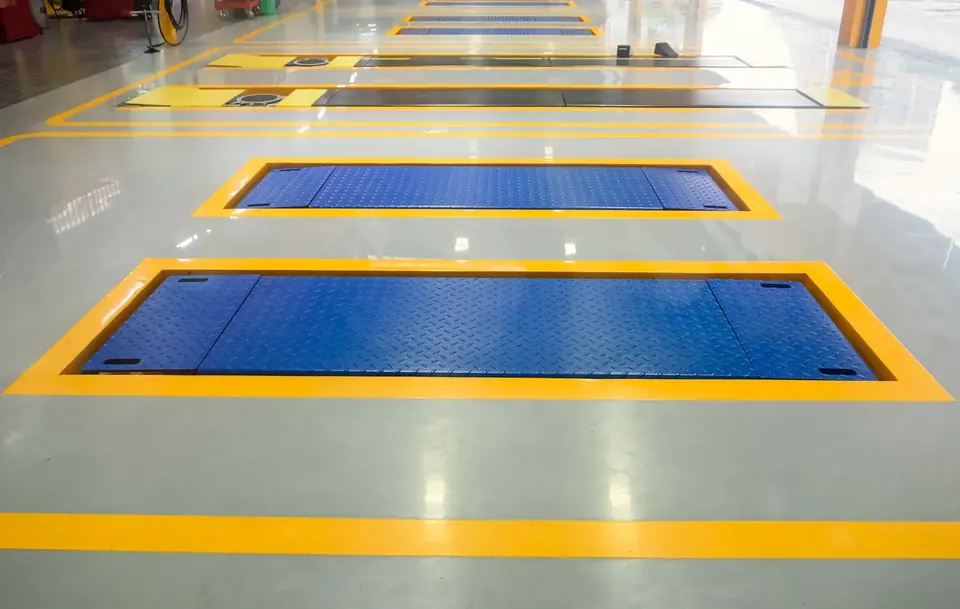
Floors specified for the chemicals and equipment used in your process, with zones marked for workstations and walkways.
04Safety striping
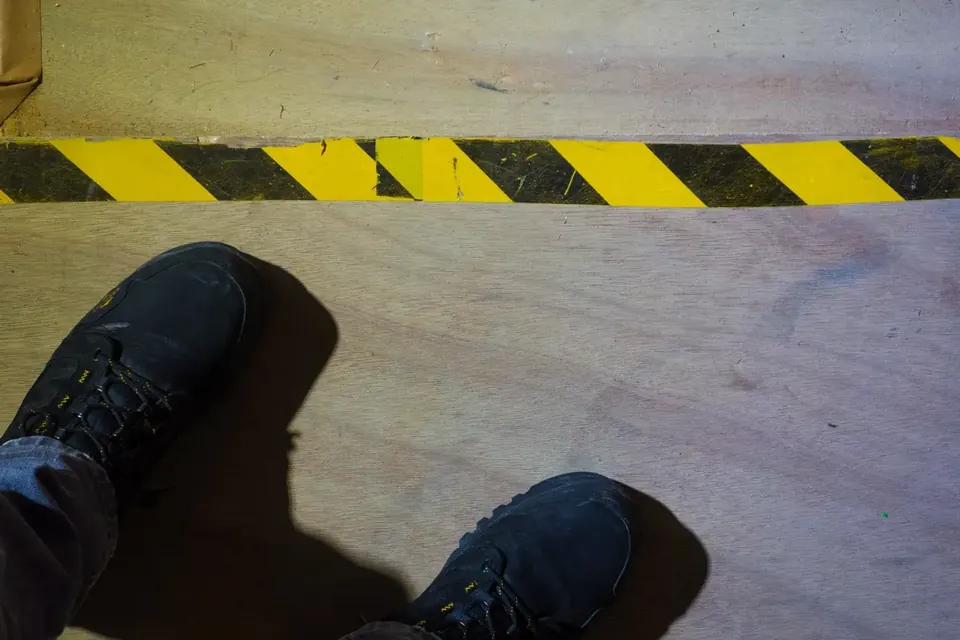
A coated floor is the right time to add durable safety markings. Painted lines on bare concrete wear off quickly under traffic. Lines installed as part of a coating system bond better and can be protected under a clear topcoat.
We mark forklift aisles, pedestrian walkways, crosswalks, rack and equipment boundaries, hazard zones, staging areas and storage locations. Colors can follow your safety program or common industry conventions, and we work from your layout drawings or help develop one.
05Installation
Industrial floors are usually installed in phases to keep the facility running.
We evaluate joints, cracks, surface wear, contamination, flatness and moisture, and review your operational requirements.
The floor is divided into zones with a schedule for moving inventory and equipment so operations continue.
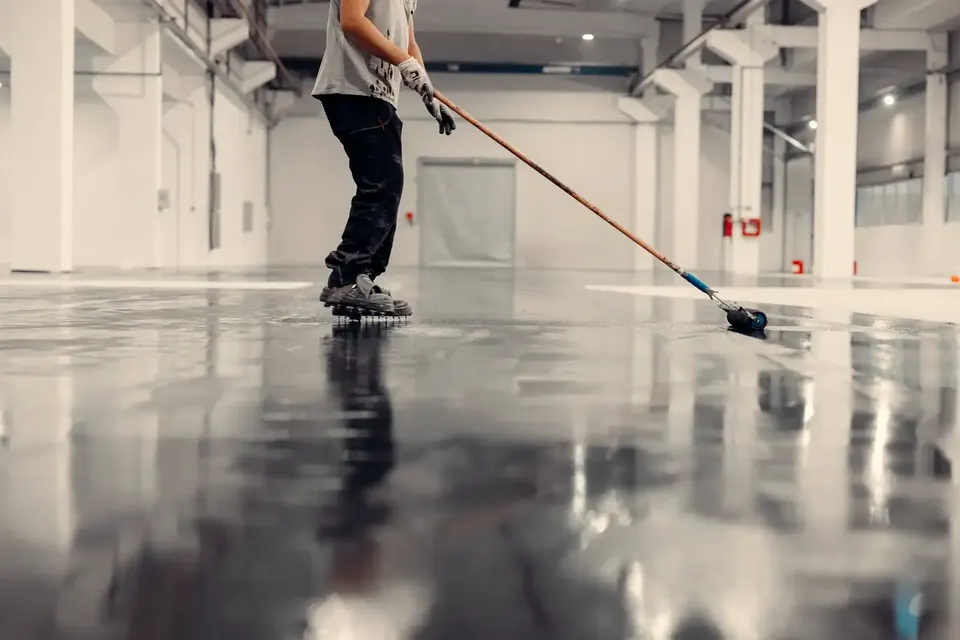
Grinding or shot blasting removes contaminants and creates the profile for a strong bond. Oil-soaked areas get extra treatment.
Spalled joints are rebuilt and filled with semi-rigid filler so forklift wheels roll smoothly.
Primer, body coats and topcoats are applied, followed by line striping and markings.
06Joint repair
Broken joints cost money every day in wheel wear and equipment damage.
Control and construction joints in warehouse slabs are a constant source of trouble. Hard forklift wheels hit unprotected joint edges thousands of times, and the edges gradually chip and break down. The result is a growing gap that jolts loads, wears out wheels and bearings, and can eventually damage the slab further.
Before coating, we repair damaged joints by cutting out loose material and rebuilding the edges with high-strength repair mortar. Then we fill the joints with a semi-rigid filler that supports wheel traffic while allowing slight movement.
Joint fillers are a maintenance item. As slabs continue to shrink over time, filler can separate and may need occasional touch-up. We can advise on inspection and maintenance as part of your facility plan.
Combined with a properly specified coating system, joint repair gives you a smoother, safer floor that is easier on equipment and people alike.
07Wisconsin considerations
Facilities in southeastern Wisconsin face seasonal conditions that affect floor performance.
Open dock doors bring cold air, snow and salt into the building. Floors near docks need tough, chemical-resistant topcoats.
Unheated warehouses and areas near doors see wider temperature ranges, which affects slab movement and product selection.
Spring and fall can bring condensation on cold slabs. Installation must be timed to avoid moisture at the surface during application.
Many facilities have seasonal slow periods or shutdowns. We help plan floor work to fit those windows.
08Specification
A floor system for a distribution warehouse is not the same as one for a machine shop. These are the details we gather during the site walk.
Forklift types and capacities, wheel materials, pallet jacks, carts and pedestrian volume. Hard polyurethane wheels put far more stress on joints and coatings than pneumatic tires, and turning areas wear faster than straight aisles.
Oils, hydraulic fluids, coolants, battery acid at charging stations, cleaning agents and anything specific to your process. Chemical resistance varies widely between systems, so we match the topcoat to what will actually land on the floor.
Heated or unheated space, freezer or cooler areas, dock door exposure and humidity. These affect product selection, cure times and installation scheduling throughout the year.
How much of the floor can be out of service at once, which areas are most critical, and when shutdowns or slow periods occur. The answers determine the phasing plan and whether fast-cure materials make sense.
09Questions
Plant and warehouse managers usually want specifics. These cover the basics; the site walk covers the rest.
Ask us directlyIn most cases. We phase work by zone, coordinate inventory moves, and use fast-cure products where appropriate. Some areas may need short closures, which we plan with you.
It depends on traffic and use. Light-duty areas may use a thinner system, while forklift aisles and production areas benefit from thicker, high-build systems. We specify thickness based on your operation.
We specify texture based on conditions. Dry warehouse areas often use smooth or lightly textured finishes. Areas exposed to water, oil or outside traffic get more texture for traction.
Lifespan depends on traffic, wheel types, chemicals and maintenance. High-traffic aisles may need periodic topcoat renewal. A properly installed system protects the slab much longer than bare concrete and can be maintained rather than replaced.
Often, yes, if the existing coating is sound. The surface is cleaned and abraded so new markings bond. We can also refresh worn striping.
Yes. Oil contamination is common in older industrial buildings. We use degreasing, grinding and, where needed, specialized primers to address it before coating.
Both are valid options. Polished concrete works well on sound slabs with modest chemical exposure and suits large distribution spaces. Coatings are better when you need chemical resistance, color, line striping integrated into the system, or when the slab is worn, stained or dusting. We can talk through both for your building.
Forklift battery charging stations see acid spills, so they need a coating specifically rated for that exposure. We often treat charging areas as a separate zone with a more chemical-resistant topcoat and clear markings.
11Free estimate
Share your square footage, traffic and schedule. We will assess the slab and put together a phased plan.