Flexible film
Better tolerance for slab movement from temperature swings than rigid systems alone.
Free on-site estimate
Tell us about the floor. We'll handle the rest.
Four quick fields. We'll follow up to schedule a visit, look at the slab in person and give you a written price for the system that suits it.
Polyurea floor coatings
Concrete moves as temperatures swing, and unheated garages and shops swing the most. Polyurea base coats are more flexible and impact-resistant than rigid systems, which makes them a strong foundation for floors that ride out Wisconsin winters.
01Overview
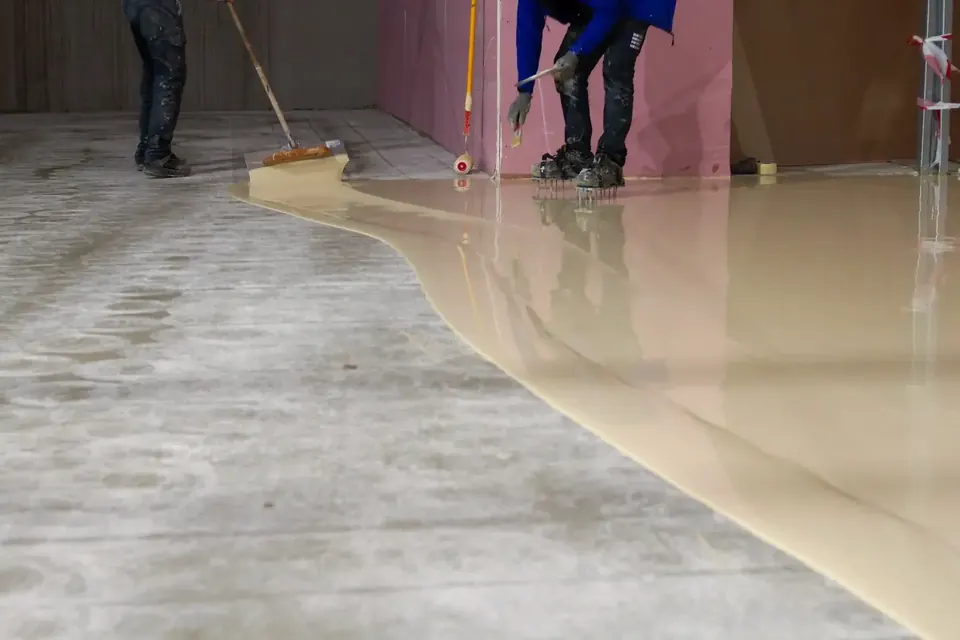
Polyurea covers a group of two-part coatings that react and harden very quickly once mixed. You may have seen spray-applied polyurea on truck beds and tank linings. Floor-grade polyureas are formulated to be rolled or squeegeed, with enough working time to apply properly but much faster cure than conventional epoxy.
The quality that sets polyurea apart is flexibility. Epoxy cures hard and rigid. That is great for build and bond, but rigid films do not like being stretched. Concrete slabs expand when they warm up and contract when they cool down, and slabs in unheated buildings go through those swings constantly. A flexible base coat can move a little with the concrete rather than fighting it.
Polyurea also tends to have good impact resistance and adhesion to properly prepared concrete. In our systems it typically serves as the base coat that bonds to the slab and holds the flake broadcast, with a polyaspartic topcoat over it for UV stability and wear.
It is not automatically the right choice for every floor. Polyurea costs more than many epoxies, and its fast cure requires skilled installers and good prep. In a heated, attached garage on a sound slab, a high-quality epoxy base may perform equally well. Where conditions are harsher, polyurea earns its place.
Fast cure has a practical upside as well. Because the base coat sets quickly, the broadcast, scrape and topcoat can follow sooner, which often shortens a garage project by a day compared with a slower epoxy base.
02Flexibility
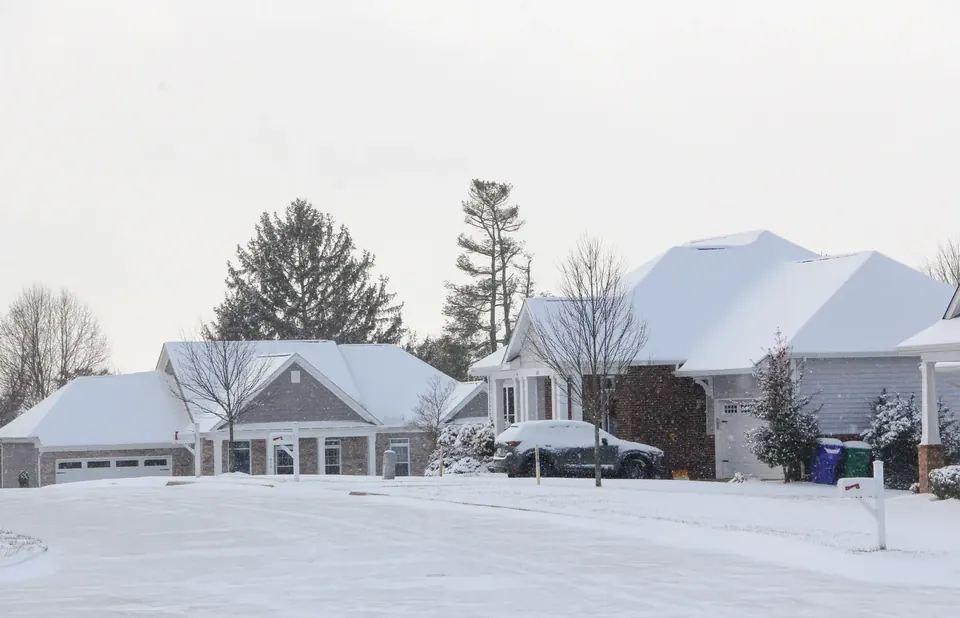
A detached garage in Menomonee Falls can sit well below freezing for days in January, then warm up quickly when the sun comes out or the car is parked inside with a heater running. Spring and fall bring frequent cycles across the freezing point. Each change makes the slab move slightly.
Rigid coatings can develop stress at cracks and joints under that movement. Over time, that can show up as hairline cracking in the coating or edge lifting near the door. A flexible base coat absorbs some of that movement, which reduces stress at the bond line.
No coating will bridge a crack that is still opening significantly, and we are upfront about that. But for normal seasonal movement, flexibility is a real advantage.
03Benefits
Better tolerance for slab movement from temperature swings than rigid systems alone.
Handles dropped tools, jacks and equipment better than thin or brittle coatings.
Cures quickly, which shortens the overall installation and gets you back in sooner.
Many formulations cure at lower temperatures than standard epoxies, helpful in cold-season work.
04Applications
These are the situations where the extra cost of a polyurea base coat is usually worth it.
 Residential
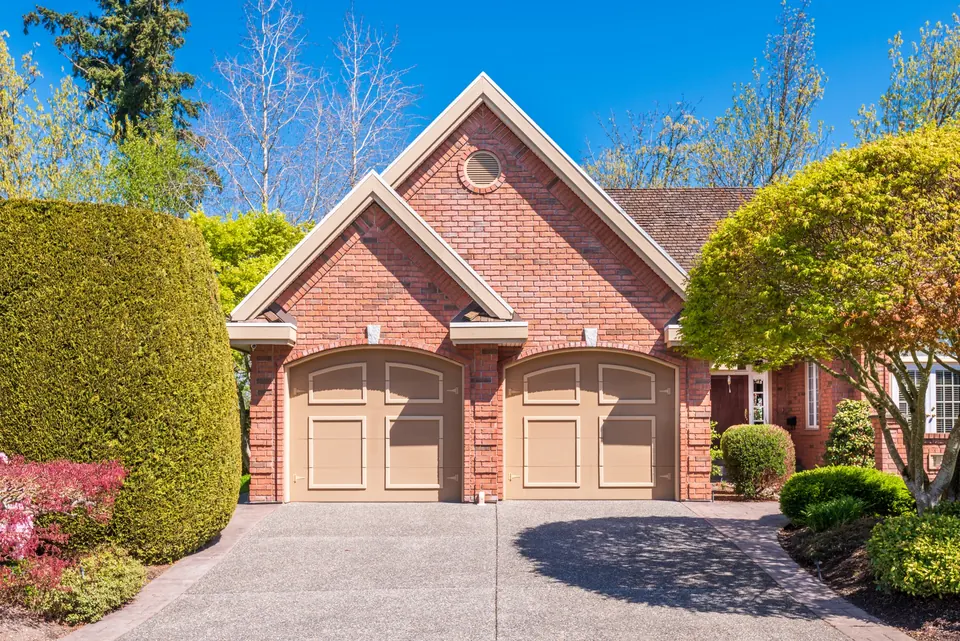
Slabs that live outdoors in all but name. Flexibility helps with freeze-thaw movement, and fast cure helps when installation windows are short.
 Shops
Dropped wrenches, floor jacks and stands are tough on brittle coatings. Polyurea adds impact resistance where you actually work on things.
 Commercial
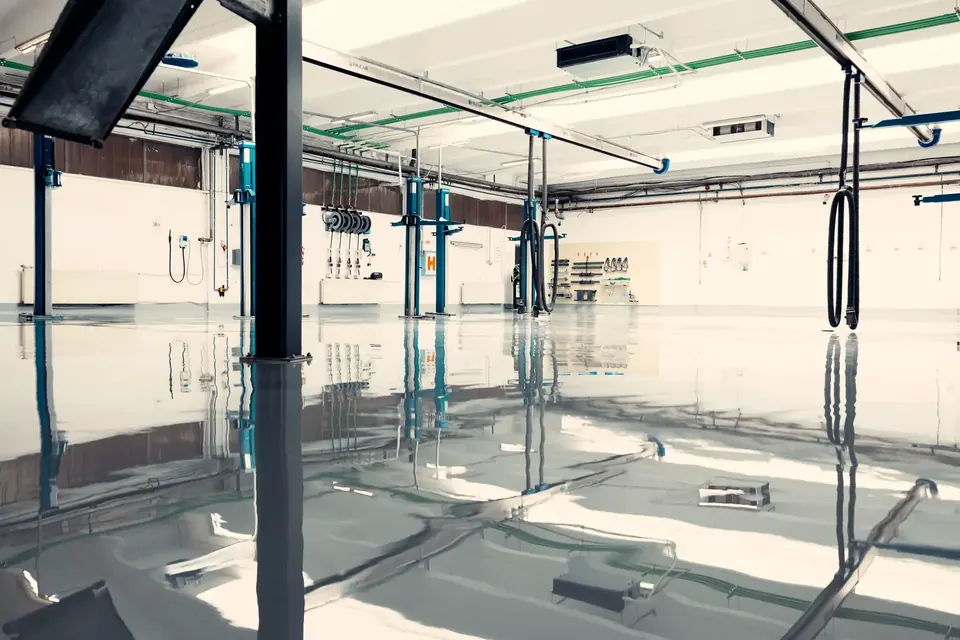
Shops with temperature swings from overhead doors opening and closing all day benefit from a base coat that flexes with the slab.
05Installation
We note cracks, joints, spalls and moisture. Active cracks and structural concerns are discussed before any work is scheduled.
Diamond grinding creates the profile polyurea needs for adhesion. Edges are ground by hand.
Cracks are filled with compatible repair material. We discuss whether to fill control joints or leave them as expansion points.
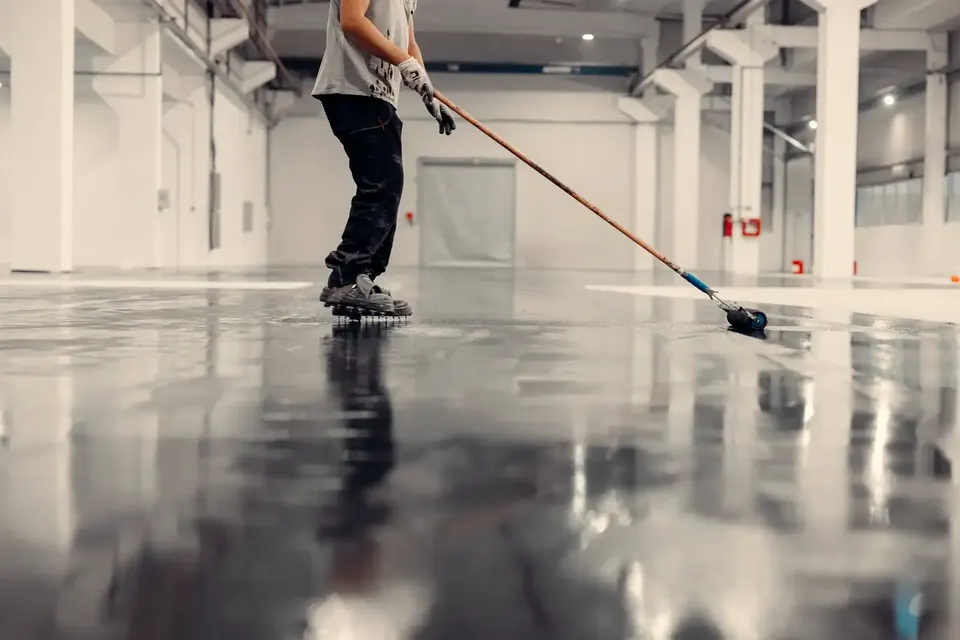
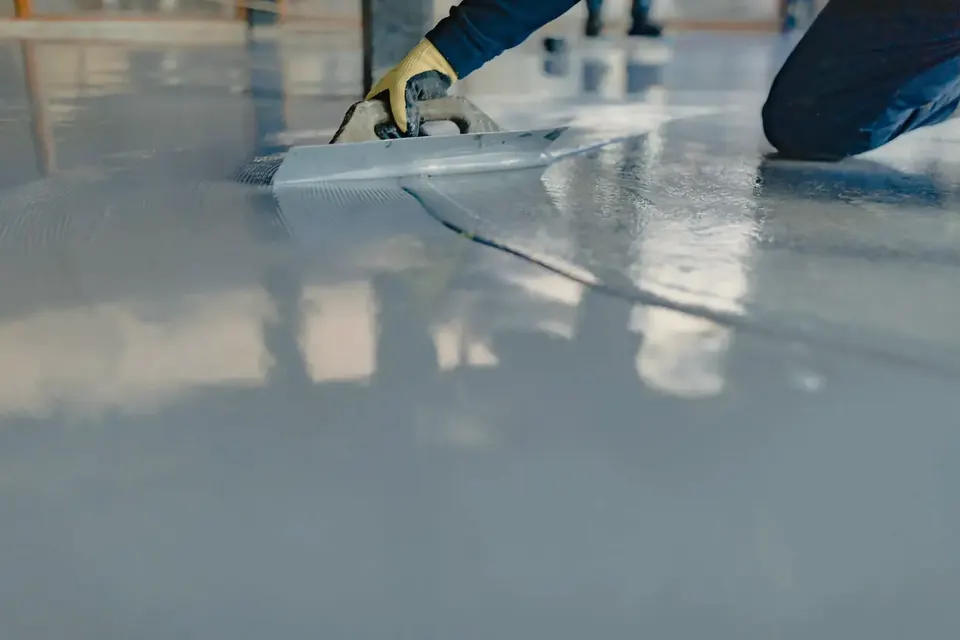
Mixed in small batches and spread quickly. Flake is broadcast into the wet base coat for decorative systems.
After scraping and cleaning, a polyaspartic topcoat seals and protects the system. Cure times are shorter than epoxy-based systems.
06Straight talk
A good coating system is honest about its limits.
Polyurea is sometimes marketed as if it were indestructible. It is a very good product, but it is still a coating, and its performance depends on the slab and the installation.
Moisture vapor coming up through a slab can affect polyurea just like any other coating. Testing and, where needed, a moisture-tolerant primer are still required on basements and suspect slabs.
Flexibility helps with normal seasonal expansion and contraction. It cannot hold together a slab that is heaving, settling or cracking because of soil or structural issues.
Fast cure and strong adhesion still depend on a ground, clean, sound surface. Polyurea applied over a poorly prepared floor will fail like anything else.
In a heated, attached garage on a sound slab, a quality epoxy-based garage system may perform just as well for less money. We recommend polyurea where its strengths solve a real problem.
07Workshops & shops
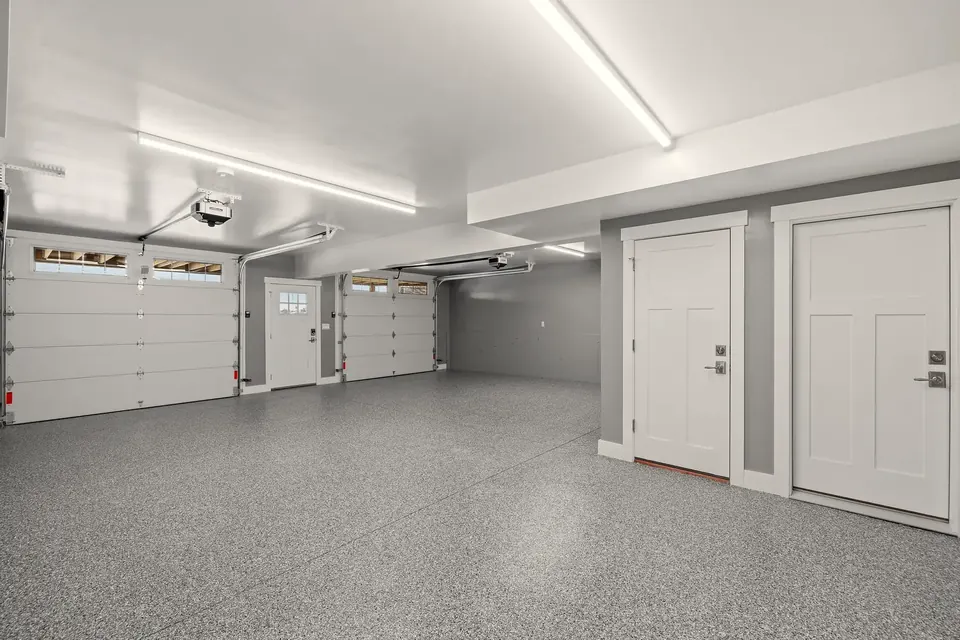
A lot of the polyurea we install goes into spaces that work hard: a detached shop behind a house in Lisbon where someone restores tractors, a heated garage in Menomonee Falls that doubles as a woodworking space, or a small service business that runs vehicles in and out all day. These floors take point loads from jack stands, impact from dropped parts and constant rolling from carts and creepers.
For those spaces we usually build a thicker polyurea base, carry a full flake broadcast for texture and finish with a polyaspartic topcoat. Where people stand at a bench for hours, mats still make sense for comfort, but the floor underneath will not be the weak point.
Ask about color too. A light floor in a shop makes dropped hardware much easier to find, and it bounces light up onto the underside of whatever you are working on. Owners who switch from bare concrete to a light-gray polyurea system often mention that before anything else.
Heating matters as well. Many shops are only heated when someone is working in them, which means the slab cycles from cold to warm and back again several times a week. That pattern is exactly where a flexible base coat makes sense.
08Questions
Polyurea gets oversold a lot. These answers aim to set realistic expectations.
Ask us directlyClose cousins. Polyaspartic is one branch of the polyurea family, tuned to cure a little slower so it can be rolled out evenly and to resist yellowing outdoors. That combination is why it usually ends up as the topcoat. Base-coat polyureas are usually formulated for flexibility and bond.
It depends on the garage. For detached or unheated garages and slabs prone to movement, a flexible polyurea base offers real advantages. For heated attached garages on sound concrete, a high-quality epoxy base can be equally effective and more economical.
A typical residential garage with a polyurea base and polyaspartic topcoat is often finished within one or two working days; prep and repairs decide which. Cure times before vehicle traffic are shorter than for all-epoxy systems.
Some polyurea and polyaspartic systems are rated for exterior use on patios, porches and walkways. Exterior work has its own requirements, which we cover on our patio and concrete coatings page.
We repair cracks before coating, and flake broadcasts help hide the repairs. Cracks that continue to move can reappear in any coating. Flexibility reduces the chance of new stress cracks in the coating itself.
Usually, yes. The materials cost more and the fast cure demands experienced installers. We will show you the price difference between a polyurea and an epoxy base so you can decide whether it is worth it for your floor.
Not directly in most cases. A failing or poorly bonded epoxy needs to be ground off so the new base coat can bond to sound concrete. A well-bonded old coating can sometimes be prepared and overcoated, which we check during the estimate.
10Free estimate
We will look at the slab and conditions and tell you whether a polyurea base is the right call.